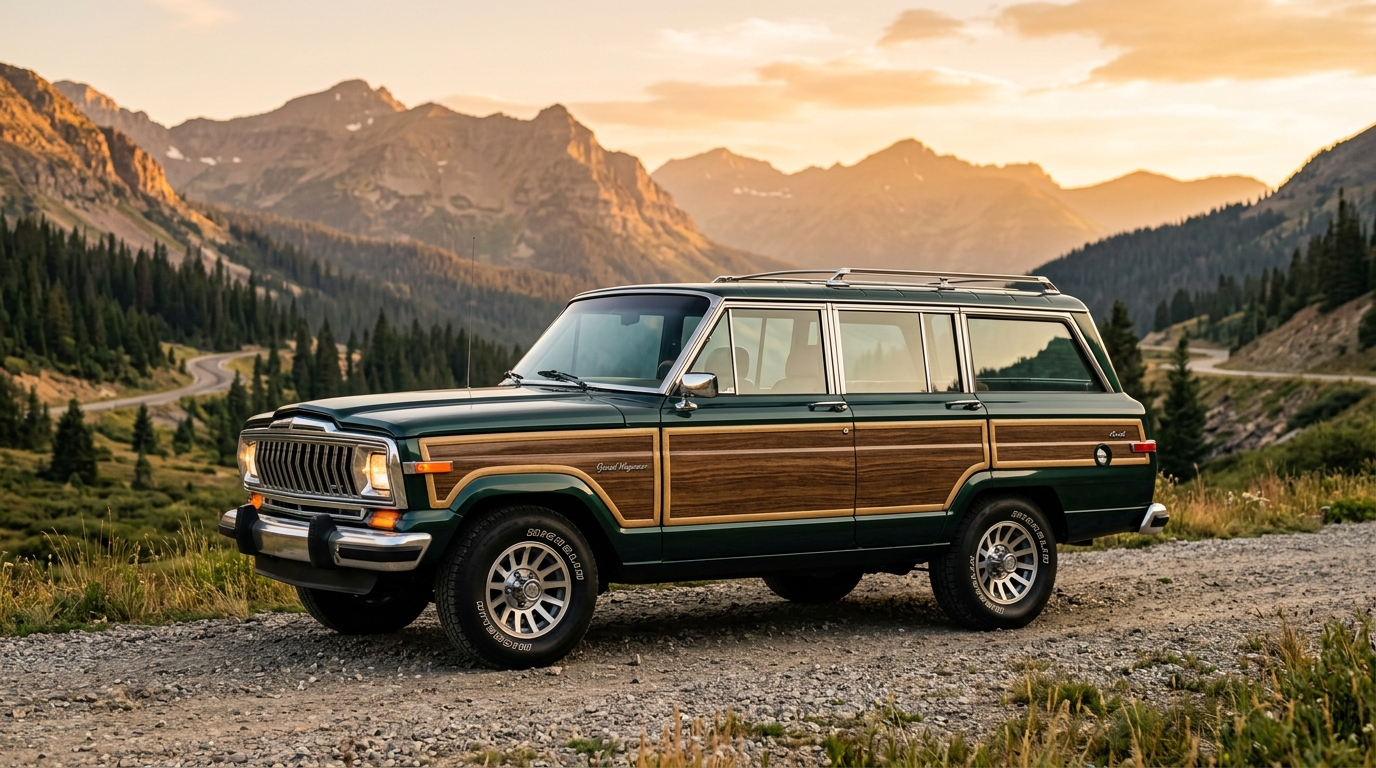
The SUV That Invented Luxury
The Jeep Wagoneer SJ debuted in 1963 as the first sport utility vehicle to combine four-wheel drive with luxury amenities — automatic transmission, independent front suspension, and a station wagon body style. It predates the Range Rover by two years and the Lincoln Navigator by 35 years. Designed by industrial designer Brooks Stevens, the Wagoneer looked nothing like the utilitarian Willys Jeeps that preceded it. It was styled to look like a luxury car that happened to have four-wheel drive, and that positioning — luxury first, capability second — is exactly what created the modern luxury SUV segment.
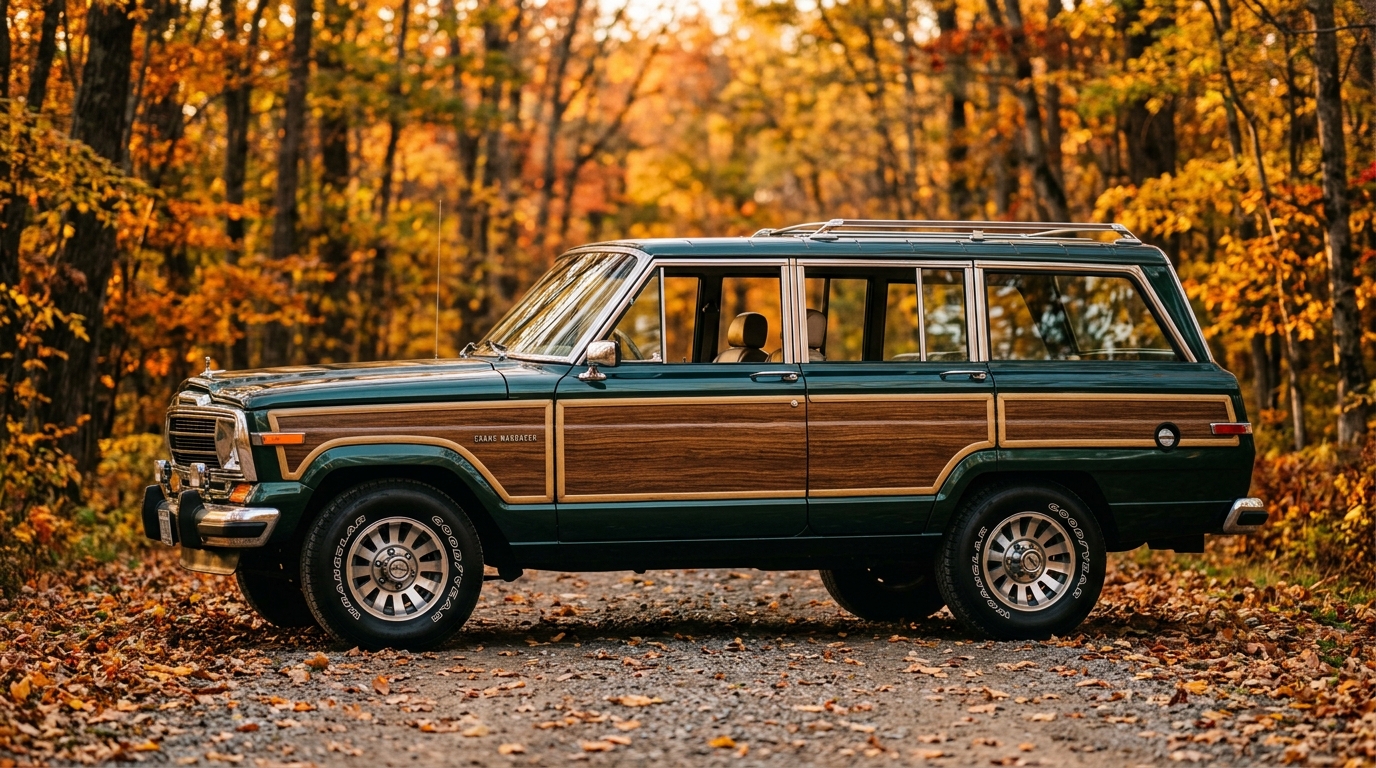
The SJ platform Wagoneer holds the record for the longest continuous production run of a single body style in US automotive history — 28 years (1963-1991) with only minor exterior changes. The basic body shell, roofline, and greenhouse remained unchanged for nearly three decades, which is why a 1963 Wagoneer and a 1991 Grand Wagoneer look recognizably similar.
The AMC Era: From Utility to Luxury
When AMC acquired Jeep from Kaiser-Jeep in 1970, the Wagoneer was a capable but basic utility vehicle. AMC saw an opportunity to position it as a luxury vehicle — a strategy that was radical at the time. Through the 1970s, AMC progressively added leather seats, power windows, power locks, power seats, air conditioning, cruise control, and the iconic fake woodgrain side panels. By 1978, the Wagoneer Limited was the most expensive Jeep ever built, and it sold to buyers who would otherwise have bought a Cadillac or Lincoln.
| Year | Milestone | Significance |
|---|---|---|
| 1963 | Wagoneer SJ debuts | First SUV with IFS + automatic transmission + 4WD |
| 1966 | Super Wagoneer introduced | First true luxury Jeep — $5,000+ (Cadillac money) |
| 1970 | AMC acquires Jeep from Kaiser | AMC begins luxury repositioning |
| 1974 | AMC 401 V8 available | Most powerful Wagoneer engine (215 HP, 320 lb-ft) |
| 1978 | Wagoneer Limited introduced | Leather, power everything, woodgrain — the luxury template |
| 1984 | Grand Wagoneer nameplate debuts | Chrysler positions it as Jeep's flagship luxury model |
| 1987 | Chrysler acquires AMC | Grand Wagoneer continues unchanged — too profitable to cancel |
| 1991 | Final Edition produced | ~1,565 units; last SJ-platform vehicle ever built |
The Wagoneer's evolution from utility vehicle to luxury icon happened gradually over 28 years. The 1978 Limited was the turning point — that is when the woodgrain, leather, and power options became standard.
Engine Specs: AMC 360 vs 401
The AMC V8s are the engines that define the Grand Wagoneer. The 360ci V8 was the standard engine from 1972 through the end of production in 1991. The 401ci V8 was the optional performance engine from 1974-1979 and is the most sought-after engine by collectors today.
| Engine | Displacement | Years | HP | Torque | Compression | Collectibility |
|---|---|---|---|---|---|---|
| AMC 360 V8 | 360ci (5.9L) | 1972-1991 | 175-195 HP | 295-320 lb-ft | 8.25:1 | Standard — most common |
| AMC 401 V8 | 401ci (6.6L) | 1974-1979 | 215 HP | 320 lb-ft | 8.25:1 | Rare — most powerful, most collectible |
| AMC 258 I6 | 258ci (4.2L) | 1968-1979 | 150-160 HP | 240 lb-ft | 8.0:1 | Base model — reliable but underpowered |
| Buick 350 V8 | 350ci (5.7L) | 1965-1971 | 190-230 HP | 280-340 lb-ft | Variable | Kaiser-era; uncommon |
| Vigilante 327 V8 | 327ci (5.4L) | 1963-1970 | 190-250 HP | 260-340 lb-ft | Variable | Rarest; Kaiser-era only |
The AMC 360 V8 is the definitive Grand Wagoneer engine — every 1984-1991 model came with it. The AMC 401 is the collector's choice: 215 HP, 320 lb-ft, and only available for 6 years. A 401-equipped Grand Wagoneer commands a 20-35% premium.
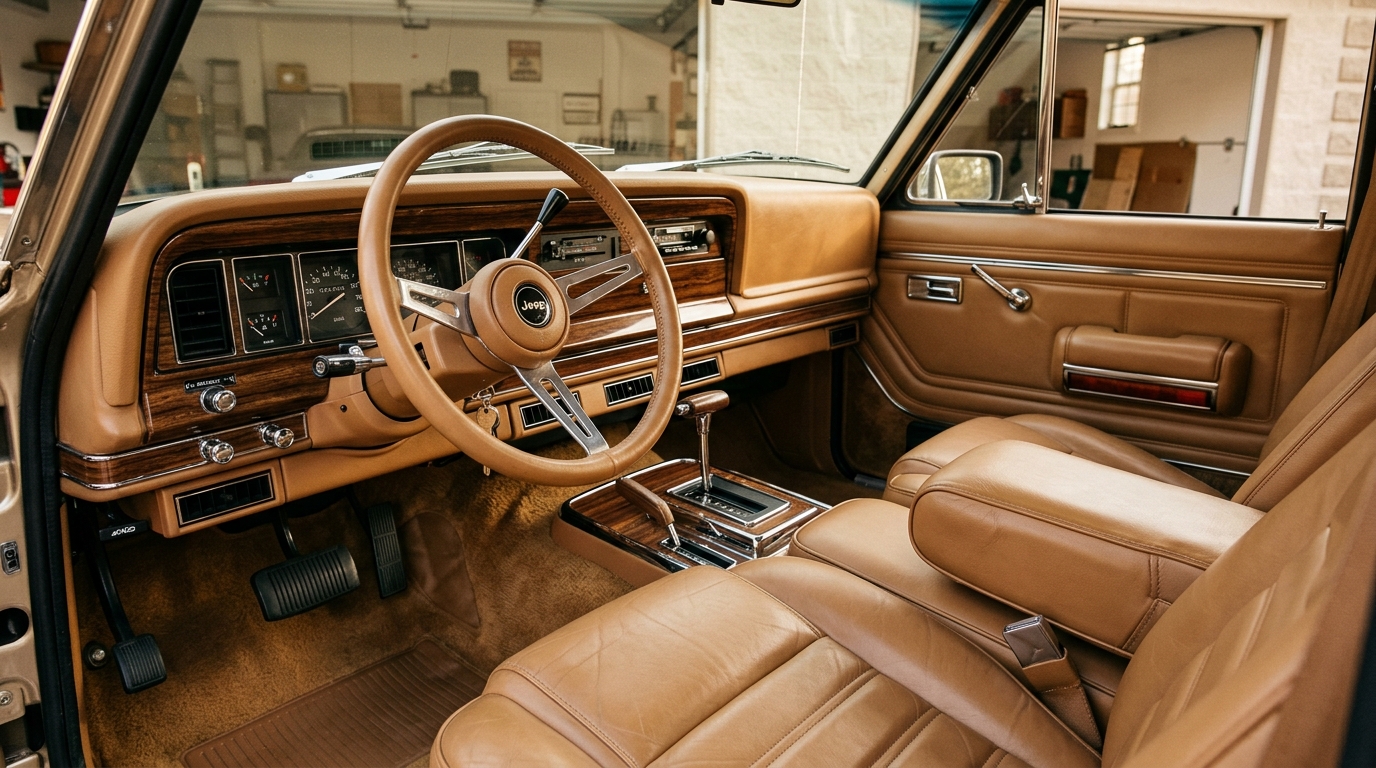
Trim History: From Base to Grand Wagoneer
| Trim Level | Years | Key Features | Current Value (#2) | Collectibility |
|---|---|---|---|---|
| Wagoneer Custom | 1963-1983 | Vinyl seats, manual windows, basic trim | $15,000-$30,000 | Low — utility spec |
| Wagoneer Limited | 1978-1983 | Leather, power windows/locks, AC, woodgrain | $45,000-$75,000 | High — first true luxury Wagoneer |
| Grand Wagoneer | 1984-1991 | Full leather, power seats, woodgrain, chrome, Quadra-Trac | $35,000-$65,000 | Highest — the iconic luxury SUV |
| Grand Wagoneer Final Edition | 1991 | Special badge, unique woodgrain, ~1,565 built | $50,000-$85,000 | Highest — rarest and most collectible |
The 1978-1979 Wagoneer Limited and the 1991 Final Edition are the two most collectible trim levels. The Limited was the first with full luxury features; the Final Edition is the rarest.
Current Market Values (2026)
| Model | Condition #1 | Condition #2 | Condition #3 | 5-Year Trend |
|---|---|---|---|---|
| Grand Wagoneer (1984-1991, AMC 360) | $60,000-$90,000 | $35,000-$65,000 | $20,000-$35,000 | +18%/yr |
| Wagoneer Limited (1978-1979) | $70,000-$100,000 | $45,000-$75,000 | $25,000-$45,000 | +15%/yr |
| Final Edition (1991) | $80,000-$120,000 | $50,000-$85,000 | $30,000-$50,000 | +20%/yr |
| Grand Wagoneer (AMC 401) | $75,000-$110,000 | $45,000-$80,000 | $25,000-$45,000 | +22%/yr |
| Wagoneer Custom (1963-1983) | $30,000-$50,000 | $15,000-$30,000 | $8,000-$15,000 | +10%/yr |
Grand Wagoneer values have surged 18-22% annually since 2020. The AMC 401 and Final Edition variants command the highest premiums. Data: Hagerty, Bring a Trailer (2020-2025).
Buying Guide: What to Look For
- Rust — Check the rocker panels, floor pans, tailgate, and wheel arches. The tailgate is particularly prone to rust because water collects in the lower seam. Rust repair costs $3,000-$8,000.
- Inspect tailgate lower seam carefully
- Check inner rocker panels with flashlight
- Look for bubbling paint at wheel arches
- Engine — The AMC 360 is reliable but check for oil leaks at the intake manifold and valve cover gaskets. The 401 is rare — verify the block casting number (3991027) to confirm authenticity.
- AMC 360 block: casting 3212904 or 3219917
- AMC 401 block: casting 3991027
- Check for intake manifold oil leaks
- Transmission — The TF727 (A727) is bulletproof. The TF999 (A999) in later models is less durable. Check for slipping between 2nd and 3rd gear.
- TH400/TF727: 3-speed, heavy-duty
- TF999: 3-speed, lighter duty
- Budget $2,500-$4,000 for a rebuild
- Woodgrain — Original woodgrain is vinyl applique, not real wood. Check for peeling, fading, and replacement quality. NOS woodgrain kits cost $500-$1,200.
- Original woodgrain is vinyl, not wood
- Check for peeling at edges
- Reproduction kits available from Wagonmaster
- Quadra-Trac — The full-time 4WD system uses a viscous coupling that can fail. Test by driving in tight circles — if it binds, the viscous coupling is bad ($1,500-$2,500 to replace).
- Binding in tight turns = bad viscous coupling
- Selec-Trac (part-time) is more reliable
- Check for fluid leaks at transfer case
The Grand Wagoneer is one of the best-appreciating classic SUVs — +18% annually over 5 years. The combination of cross-generational appeal (boomers remember them, Gen X wants them), limited Final Edition supply, and the broader SUV collector boom makes the 1984-1991 Grand Wagoneer a strong hold. Buy the cleanest, rust-free example you can find with the AMC 360 or 401 V8.
Thinking about buying a Grand Wagoneer? Get an AI-powered valuation based on real auction data and market trends.
Get AI ValuationSources & References
- Wagonmaster — Grand Wagoneer Parts and Restoration — The premier Grand Wagoneer restoration shop and parts supplier in Kerrville, Texas
- Hagerty — Grand Wagoneer Price Guide — Current market values for all Grand Wagoneer variants and conditions
- Related: Jeep Wagoneer SJ Generation Hub (1963-1991) — Complete generation guide with production numbers, engine specs, and trim breakdown
- Related: Jeep Cherokee XJ Generation Hub (1984-2001) — The compact Jeep SUV that shared the Wagoneer's 4.0L AMC I6 engine
- Related: Best Classic Cars Under $50K (2026) — Grand Wagoneers appear in the $50K investment guide
- Related: Classic Car Market Trends 2026 — SUVs and trucks are the fastest-growing collector segment