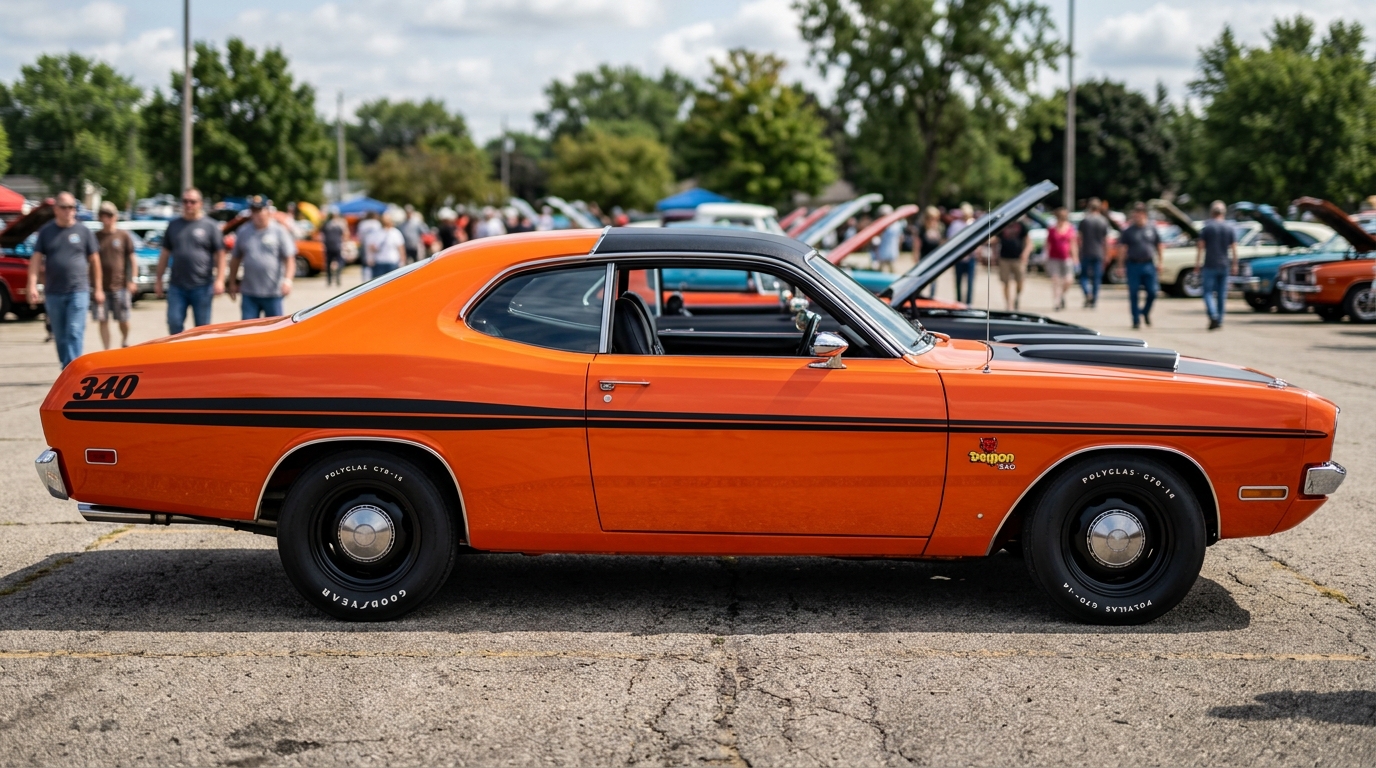
Production Overview: 1968–1976
The Dodge Dart was introduced in 1960 as a full-size car but became a compact in 1963 on the Chrysler A-body platform. The 1968–1976 generation covered here is the most collectible — it included the Dart Swinger (hardtop coupe), the Demon (fastback coupe, Duster twin), and the Dart Sport (renamed Demon after 1972 due to religious objections). The Dart was Dodge's best-selling compact, with total production exceeding 1.2 million units across all body styles and years.
The Demon (1971–1972) was the Dart's answer to the Plymouth Duster — a semi-fastback coupe with the 340 V8 as the performance option. Only ~8,000 Demon 340s were built across two years, making it significantly rarer than the Duster 340 (~52,400 built). The Dart Sport replaced the Demon name in 1973 and continued through 1976.
Engine Options and Performance Variants
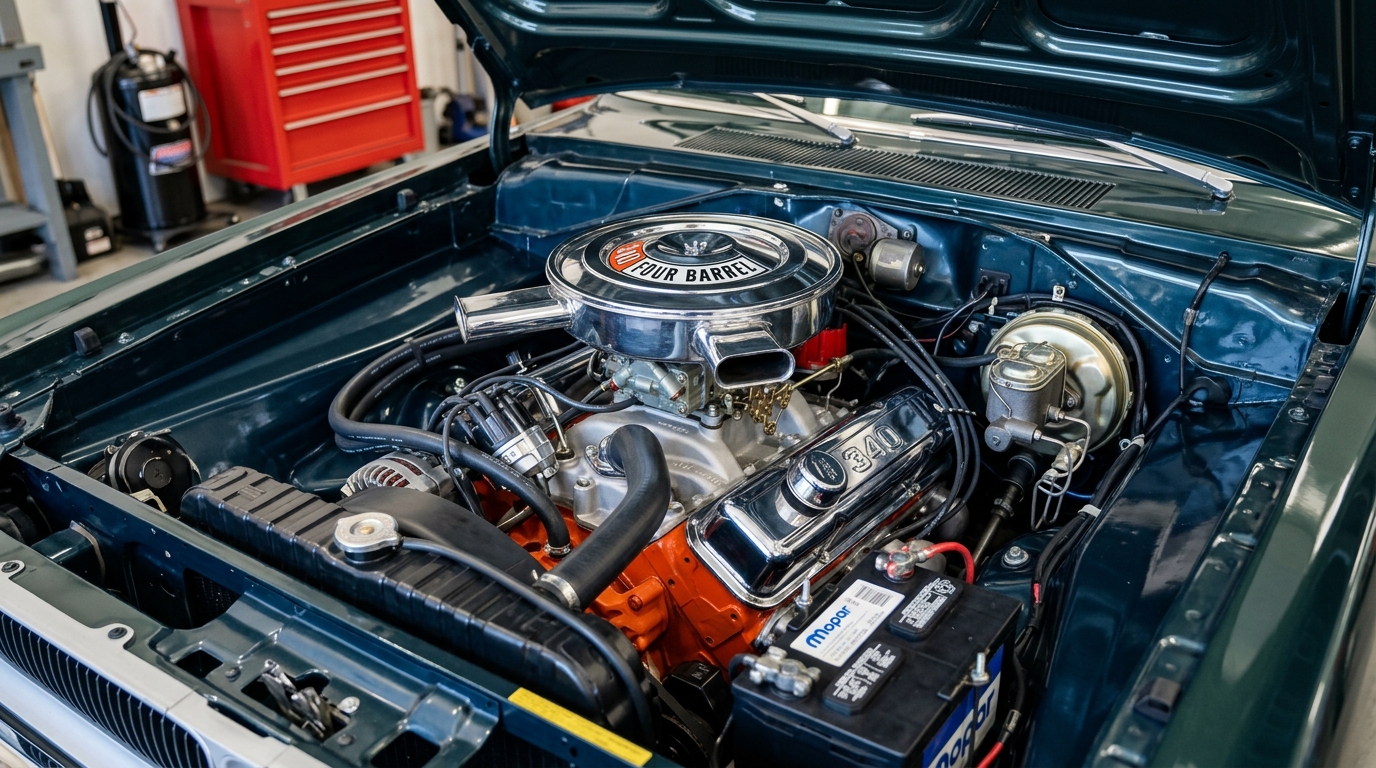
The Dart/Demon shared the same engine lineup as the Duster — the 225ci Slant Six (145–170hp) as the base, the 318ci LA V8 (230–250hp) as the most common V8, and the 340ci LA V8 (275hp in 1971, 235hp in 1972) as the performance flagship. The Dart GTS (1968–1969) offered the 340 and even the 383 big-block, making it the most powerful Dart of the era — but the 383 was dropped after 1969 due to weight distribution issues.
| Model | Years | Engine | HP | Torque | Production | Notes |
|---|---|---|---|---|---|---|
| Dart GTS 340 | 1968–1969 | 340ci V8 | 275hp | 340 lb-ft | ~6,400 | First performance Dart; rare |
| Dart GTS 383 | 1968–1969 | 383ci V8 | 300hp | 410 lb-ft | ~1,200 | Big-block Dart; very rare, nose-heavy |
| Dart Swinger 340 | 1969–1970 | 340ci V8 | 275hp | 340 lb-ft | ~4,800 | Hardtop coupe; rarest Swinger |
| Demon 340 | 1971–1972 | 340ci V8 | 235–275hp | 290–340 lb-ft | ~8,000 | Duster twin; most collectible Dart |
| Dart Sport 340 | 1973–1974 | 340ci V8 | 240hp | 290 lb-ft | ~5,200 | Renamed Demon; lower compression |
| Dart Sport 360 | 1975–1976 | 360ci V8 | 220hp | 295 lb-ft | ~3,800 | Last performance Dart; best late buy |
The Demon 340 (1971–1972) is the most collectible — rarest and highest power. The Dart Sport 360 (1975–1976) is the best value late-model buy.
Demon vs Duster: Which to Buy?
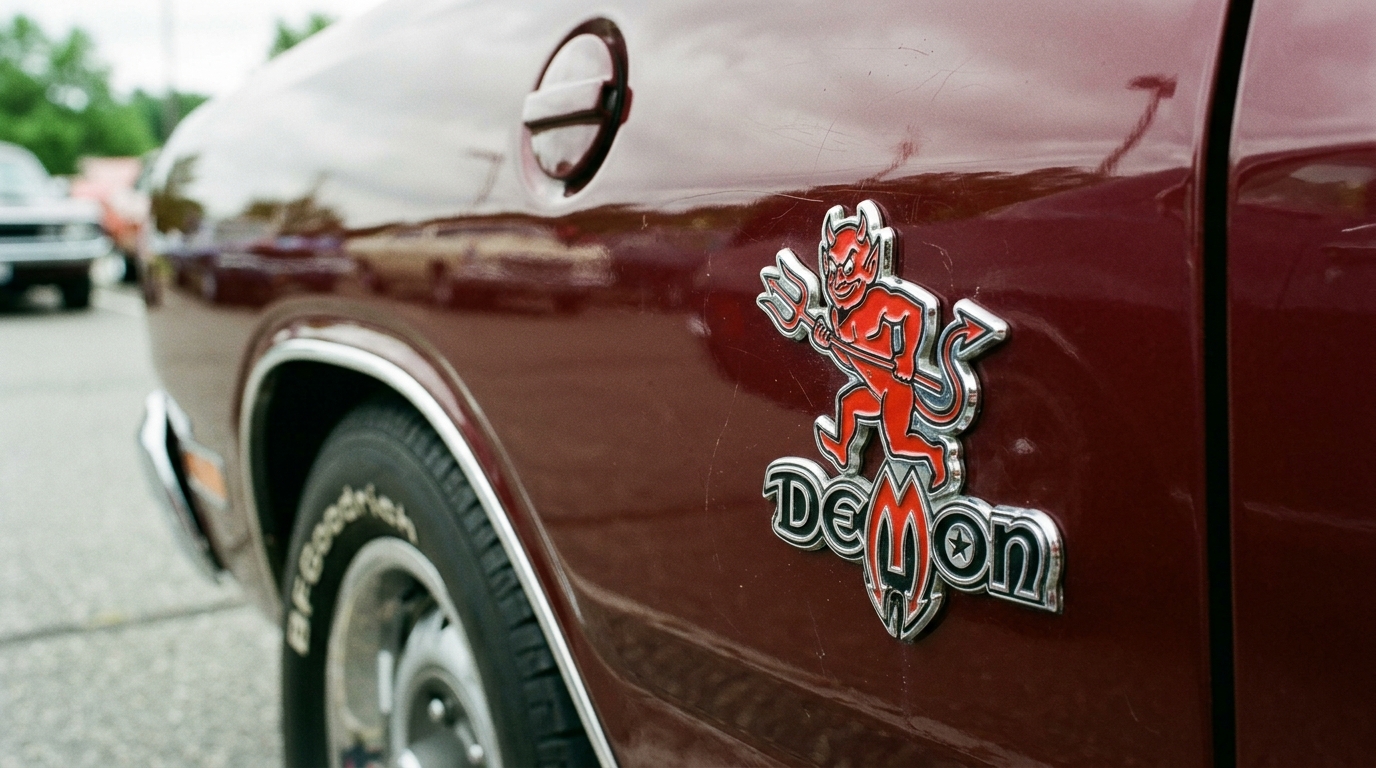
The Demon 340 and Duster 340 are mechanically identical — same A-body platform, same 340 V8, same transmission options. The differences are cosmetic: the Demon has a Dodge grille, different taillights, and "Demon" badging with a devil mascot. The Demon is rarer (~8,000 vs ~52,400 Duster 340s), which translates to a 20-30% price premium. If you want the rarest A-body Mopar, buy the Demon. If you want the best value, buy the Duster 340.
Dodge dropped the "Demon" name after 1972 due to complaints from religious groups. The car was renamed "Dart Sport" for 1973+. This makes the 1971–1972 Demon the only two years with the devil mascot badging — a key collectibility factor.
Buying Guide
Rust is the primary concern on A-body Mopars — check the quarter panels, trunk floor, floor pans, and subframe connectors. The 340 V8 is reliable but check for cracked cylinder heads (common on high-compression 1970–1971 models). The 727 and 904 transmissions are bulletproof if fluid is maintained. Demon-specific parts (grille, taillights, badging) are harder to find than Duster parts — factor this into restoration costs.
- What is the most valuable Dart/Demon?
- The 1968 Dart GTS 383 — only ~1,200 built with the big-block 383 V8. These trade at $50,000–$80,000 in #2 condition. The 1971 Demon 340 is second at $35,000–$55,000.
- Is the Dart a good budget classic?
- Yes — the Dart Sport with the 318 V8 (1973–1976) starts at $12,000–$20,000 in #2 condition. It's the cheapest entry into classic Mopar ownership with a V8. The 225 Slant Six models are even cheaper at $8,000–$15,000.
- Should I buy a Demon or a Duster?
- Buy the Demon if you want rarity and the devil mascot badging (20-30% premium). Buy the Duster 340 if you want the same performance for less money. Mechanically they are identical.
- Are parts readily available?
- Yes — the A-body platform is one of the best-supported Mopar platforms for restoration parts. Aftermarket suppliers make nearly everything for the Dart/Demon. Demon-specific trim parts (grille, taillights) are harder to find but available.
Get an AI-powered valuation for your Dodge Dart or Demon — free, instant, based on real auction data.
Value My CarSources & References
- Hagerty Price Guide — Valuation Tools — Independent valuation data by condition grade #1-#4
- Bring a Trailer — Auction Results — Real-world auction sale prices for market comparison
- Related: Plymouth Duster Generation Hub 1970 1976 — In-depth related guide from our editorial library
- Related: Plymouth Barracuda Generation Hub 1964 1974 — In-depth related guide from our editorial library
- Related: Nova Generation Hub 1962 1974 — In-depth related guide from our editorial library