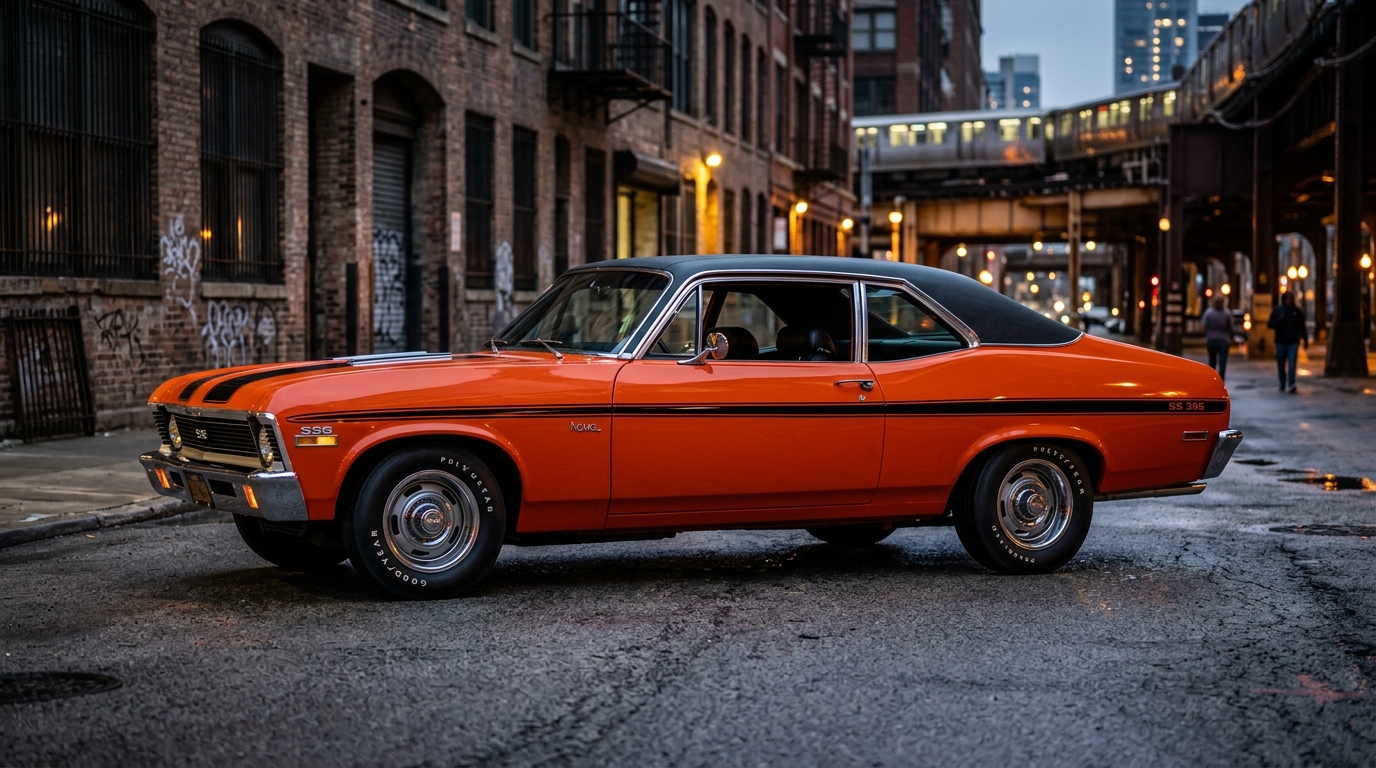
The Chevrolet Nova (1962–1974) was GM's compact X-body car, originally called the Chevy II. The 1968–1972 SS 396 is the most collectible — a big-block in a 3,000-lb car makes it a muscle car sleeper. The 1970–1971 SS 396 (375hp) is the peak, with #2 examples at $55,000–$85,000. The 1968–1970 SS 350 is the best value buy at $35,000–$50,000 (#2). The 1962–1967 Chevy II 327 is the entry point at $20,000–$30,000 (#2). Novas are 20–30% cheaper than equivalent Camaros but offer the same big-block performance in a lighter, more understated package.
Chevy II to Nova: Name and Generation Evolution
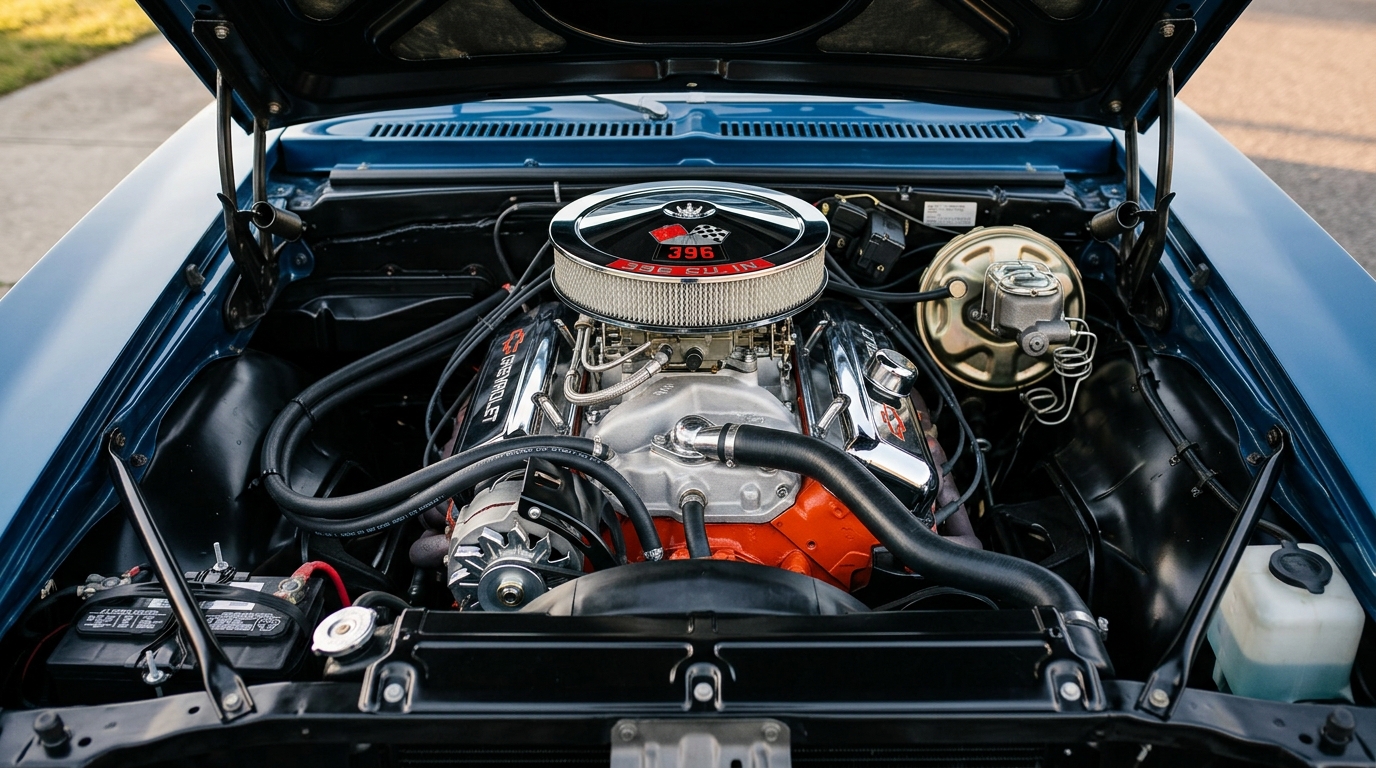
The Nova began as the Chevy II in 1962 — GM's answer to the Ford Falcon. The "Nova" name was originally a trim level (1963) before becoming the model name in 1969. The car evolved through three generations on the X-body platform, getting progressively more muscular until emissions and insurance regulations ended the muscle car era after 1972.
| Generation | Years | Name | Styling | Key Engines |
|---|---|---|---|---|
| 1st Gen | 1962–1965 | Chevy II | Clean, boxy, compact; Falcon competitor | 153ci I4, 194ci I6, 283ci V8, 327ci V8 |
| 2nd Gen | 1966–1967 | Chevy II | Slightly larger, more sculpted; first SS 327 | 153ci I4, 230/250ci I6, 283ci V8, 327ci V8 (350hp) |
| 3rd Gen | 1968–1974 | Chevy II Nova (1968–69) / Nova (1969+) | Semi-fastback roofline; muscular stance; SS 396 | 250ci I6, 307ci V8, 350ci V8, 396ci V8 (325/375hp) |
The 3rd generation (1968–1974) is the most collectible. The 1968 model was the first to offer the 396 big-block, making it a genuine muscle car. The Nova was lighter than the Camaro (~3,000 vs 3,300 lbs), making it faster in a straight line.
Production Numbers
| Year | Total Production | SS Production (est.) | Notes |
|---|---|---|---|
| 1962 | ~327,000 | N/A | First year; I4/I6/V8 options; 2-door, 4-door, wagon, convertible |
| 1963 | ~325,000 | N/A | Nova trim level introduced; 327 V8 optional |
| 1964 | ~310,000 | N/A | Minor updates; 327 (300hp) available |
| 1965 | ~213,000 | N/A | Declining sales; 327 (350hp) top engine |
| 1966 | ~254,000 | ~10,000 | All-new 2nd gen; SS 327 (350hp) introduced |
| 1967 | ~216,000 | ~8,000 | Last 2nd-gen year; minor updates |
| 1968 | ~258,000 | ~8,500 | All-new 3rd gen; SS 396 introduced; first big-block Nova |
| 1969 | ~257,000 | ~6,600 | Nova becomes model name; 396 (375hp) L78 available |
| 1970 | ~254,000 | ~5,300 | 396 becomes 402 (badged as 396); L78 continues |
| 1971 | ~230,000 | ~3,900 | Compression drop; 396/402 detuned; single headlights |
| 1972 | ~221,000 | ~2,500 | Last big-block Nova; SS becomes option package |
| 1973 | ~205,000 | N/A | Colonnade-style bumpers; no more big-block |
| 1974 | ~197,000 | N/A | Final year of classic X-body; 350ci top engine |
Production data from GM. SS production dropped sharply after 1970 due to insurance surcharges and emissions regulations. The 1971–1972 SS 396 is the rarest big-block Nova (~6,400 combined).
Engine Specifications
| Engine | Displacement | Years | HP | Torque | Notes |
|---|---|---|---|---|---|
| 153ci I4 | 153ci | 1962–1970 | 90–110 | 153 | Base engine; very slow; rare in later years |
| 194ci I6 | 194ci | 1962–1965 | 120 | 177 | Optional I6; replaced by 230 |
| 230ci I6 | 230ci | 1963–1967 | 140 | 205 | Standard I6 on most 1st/2nd gen |
| 250ci I6 | 250ci | 1968–1974 | 155 | 235 | Base I6 on 3rd gen; reliable |
| 283ci V8 | 283ci | 1962–1968 | 195–220 | 285–295 | First V8 option; common on 1st/2nd gen |
| 307ci V8 | 307ci | 1968–1973 | 200 | 300 | Base V8 on 3rd gen; adequate but not exciting |
| 327ci V8 | 327ci | 1962–1969 | 250–350 | 350–360 | Best 1st/2nd gen engine; 350hp version is desirable |
| 350ci V8 | 350ci | 1969–1974 | 255–300 | 360–380 | Top small-block; standard in SS 350 |
| 396ci V8 (L35) | 396ci | 1968–1970 | 325 | 415 | Base big-block SS; most common 396 Nova |
| 396ci V8 (L78) | 396ci | 1968–1970 | 375 | 415 | High-output 396; solid lifters; rare and valuable |
| 402ci V8 (LS3) | 402ci | 1970–1972 | 240–300 | 415–460 | Bored 396; badged "396"; last big-block 1972 |
The L78 396 (375hp) is the most desirable Nova engine — same engine as the Camaro Z28/SS but in a lighter car. The 327 (350hp) is the best 1st/2nd gen engine. The 153ci I4 is the least desirable — very slow and no collector appeal.
Market Values by Condition (2026)
| Variant | #1 Concours | #2 Excellent | #3 Good | #4 Fair | 5-Year Trend |
|---|---|---|---|---|---|
| 1968–1970 SS 396 L78 (375hp) | $110,000 | $75,000 | $42,000 | $18,000 | +40% |
| 1968–1970 SS 396 L35 (325hp) | $75,000 | $50,000 | $28,000 | $12,000 | +33% |
| 1971–1972 SS 396/402 Coupe | $65,000 | $45,000 | $24,000 | $10,000 | +30% |
| 1968–1970 SS 350 Coupe | $65,000 | $45,000 | $24,000 | $10,000 | +30% |
| 1971–1972 SS 350 Coupe | $50,000 | $35,000 | $18,000 | $7,500 | +25% |
| 1966–1967 SS 327 (350hp) Coupe | $55,000 | $38,000 | $20,000 | $8,000 | +28% |
| 1962–1965 Chevy II 327 Coupe | $40,000 | $27,000 | $14,000 | $5,500 | +22% |
| 1962–1965 Chevy II 283 Coupe | $30,000 | $20,000 | $10,000 | $4,000 | +18% |
| 1968–1974 350/Malibu Coupe | $30,000 | $20,000 | $10,000 | $4,000 | +20% |
| 1968–1970 SS 396 Convertible | $95,000 | $65,000 | $36,000 | $15,000 | +35% |
| 1966–1967 SS 327 Convertible | $65,000 | $45,000 | $24,000 | $10,000 | +30% |
| 1962–1967 Chevy II 6-cylinder | $20,000 | $13,000 | $6,500 | $2,500 | +15% |
Values from Mecum, Barrett-Jackson, and Bring a Trailer sold data (2024–2026). Novas are 20–30% cheaper than equivalent Camaros. Convertibles are rare (Nova convertibles were discontinued after 1972) and command 30–50% premium.
Value Trend Chart (2020–2026)
Nova Average Values (#2 Condition)
| 2020 | 2021 | 2022 | 2023 | 2024 | 2025 | 2026 | |
|---|---|---|---|---|---|---|---|
| SS 396 L78 375hp (#2) | 50000 | 58000 | 65000 | 70000 | 73000 | 75000 | 75000 |
| SS 396 L35 325hp (#2) | 35000 | 40000 | 44000 | 47000 | 49000 | 50000 | 50000 |
| SS 350 (#2) | 30000 | 35000 | 39000 | 42000 | 44000 | 45000 | 45000 |
Nova vs Camaro: The Smart Alternative
| Factor | Nova SS 396 | Camaro SS 396 | Difference |
|---|---|---|---|
| Platform | X-body (compact) | F-body (pony car) | Different chassis |
| Weight | ~3,000 lbs | ~3,300 lbs | Nova is 300 lbs lighter |
| Engine | Same 396 L35/L78 | Same 396 L35/L78 | Identical |
| Transmission | Same Muncie/TH400 | Same Muncie/TH400 | Identical |
| 0-60 mph | ~5.5 sec (L78) | ~6.0 sec (L78) | Nova is faster |
| Styling | Understated, sedan-like | Aggressive, sporty | Camaro looks faster |
| Value (#2) | $50,000–$75,000 | $58,000–$95,000 | Nova is 20–30% cheaper |
| Collector Pool | Smaller — niche appeal | Larger — mainstream | Camaro sells faster |
The Nova is the smart alternative to the Camaro — same big-block drivetrain, 300 lbs lighter, faster in a straight line, and 20–30% cheaper. The trade-off: less aggressive styling and a smaller buyer pool when it's time to sell.
Key Option Codes (RPO)
Nova/Chevy II RPO Codes
| Code | Name / Description |
|---|---|
L78 | 396ci V8 (375hp) Solid lifters; high-output big-block; rare; 1968–1970 |
L35 | 396ci V8 (325hp) Base big-block SS; most common 396 Nova; 1968–1970 |
LS3 | 402ci V8 (240–300hp) Bored 396; badged "396"; 1970–1972; last big-block |
L48 | 350ci V8 (295–300hp) Top small-block; standard in SS 350; 1969–1974 |
L79 | 327ci V8 (350hp) Best 1st/2nd gen engine; solid lifter; rare and desirable |
Z27 | Super Sport (SS) Package SS badges, sport suspension, bucket seats; 1966–1972 |
M21 | 4-Speed Manual (Muncie) Close-ratio; preferred over M20; standard on L78 |
M40 | Turbo Hydra-Matic 350 3-speed automatic; available on non-L78 models |
G80 | Positraction Rear Axle Limited-slip; essential for big-block torque |
F41 | Heavy-Duty Suspension Stiffer springs, larger sway bars; standard on SS |
J52 | Power Disc Brakes Front disc brakes; standard on SS 396; optional on others |
N10 | Dual Exhaust Standard on SS 396; adds performance and sound |
C60 | Air Conditioning Factory A/C; adds $2,000–$4,000; rare on SS 396 |
V26 | Vinyl Top Common on 3rd gen; check for rust underneath |
Buying Guide
- Best investment: 1968–1970 SS 396 L78 (375hp)
- 375hp big-block in a 3,000-lb car; faster than a Camaro SS
- $75,000 (#2); appreciating 10–12% annually
- Rarest Nova variant; verify L78 engine code and trim tag
- Best value: 1968–1970 SS 396 L35 (325hp)
- 325hp big-block; same SS look as L78
- $50,000 (#2) — 33% cheaper than L78
- More common; easier to find and restore
- Best small-block: 1968–1970 SS 350
- 300hp 350ci; reliable and affordable to maintain
- $45,000 (#2) — entry to 3rd-gen SS ownership
- Good driver-quality car; can be daily-driven
- Best 1st/2nd gen: 1966–1967 SS 327 (350hp)
- 350hp 327; clean early styling; $38,000 (#2)
- Rarer than 3rd gen; rising in value
- Good alternative to a 1st-gen Camaro at half the price
- Best entry point: 1962–1965 Chevy II 327 Coupe
- 300hp 327 V8; classic compact; $27,000 (#2)
- Good restomod platform; can swap to 350/396 later
- More available than SS models
- Best sleeper: 1973–1974 350 Coupe (restomod)
- No SS badge but same body; drop in a 350/383
- $10,000–$15,000 base car + $15,000 engine swap
- Ultimate sleeper — looks like a grandma car, goes like muscle
- Avoid: 153ci I4 models
- 90hp is dangerously slow in modern traffic
- No collector appeal; only valuable as a shell
- Only buy if you plan a full restomod conversion
Frequently Asked Questions
- What is the difference between Chevy II and Nova?
- Chevy II was the model name from 1962–1968. Nova was originally a trim level (1963+). In 1969, "Nova" became the model name, replacing "Chevy II." All 1969+ cars are Novas; all 1962–1968 cars are Chevy IIs (with Nova as a trim option).
- Is a Nova SS a real muscle car?
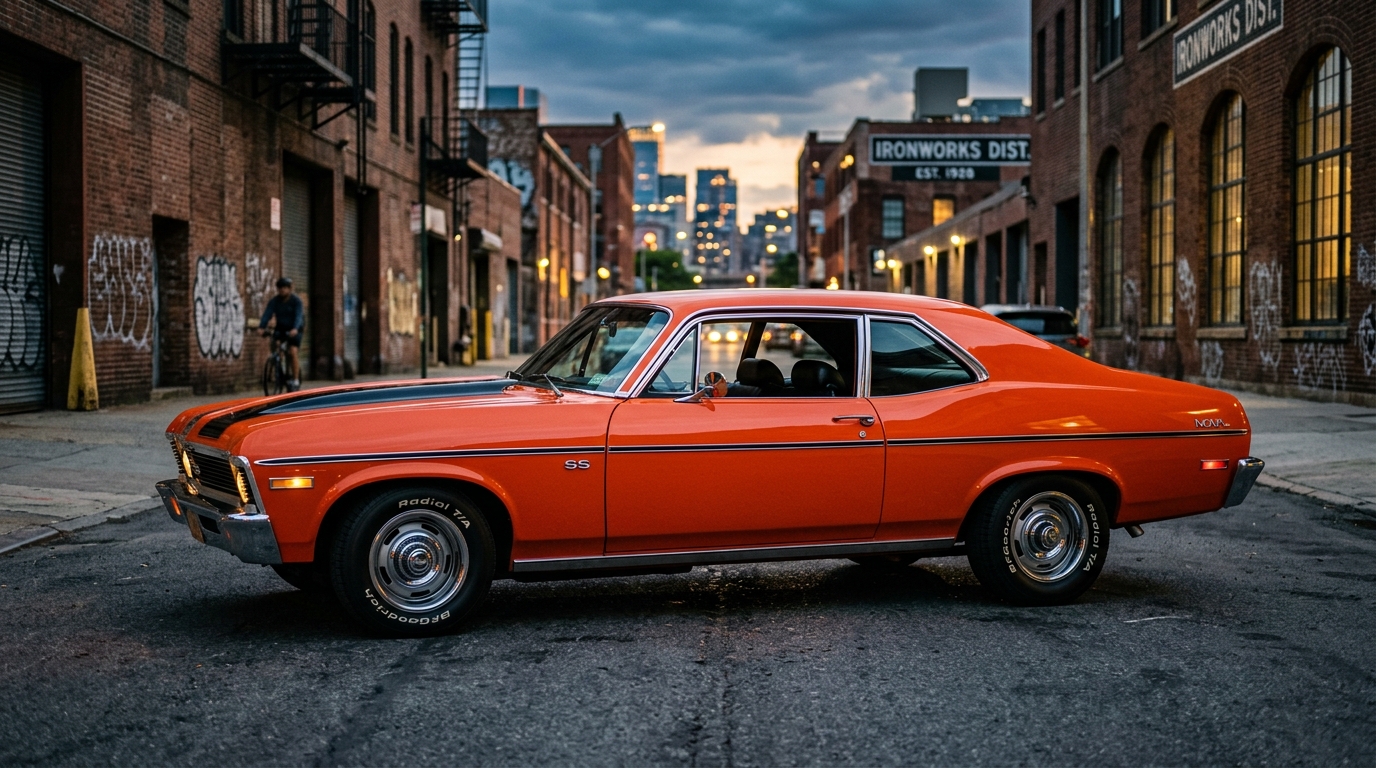
- Yes — the 1968–1972 SS 396 Novas are genuine muscle cars. They have the same 396 big-block as the Chevelle SS and Camaro SS, but in a lighter body. The L78 375hp Nova is one of the fastest muscle cars of the era, running 0-60 in ~5.5 seconds.
- Why are Novas cheaper than Camaros?
- Supply and demand — more people want Camaros because of the aggressive styling and racing heritage. Novas look like compact sedans, which appeals to a smaller niche of collectors who appreciate the sleeper factor. mechanically, the SS 396 Nova and SS 396 Camaro are nearly identical.
- What is a Nova "sleeper"?
- A sleeper is a car that looks slow but is fast. The Nova is the ultimate sleeper platform — it looks like a basic compact, but with a 350 or 383 swap, it can run 12-second quarter miles. Many enthusiasts build 1973–1974 Novas (no SS available) with big engines for maximum sleeper effect.
- Are Nova parts interchangeable with Camaro parts?
- Many mechanical parts are shared (engines, transmissions, rear axles, brakes), but body and interior parts are NOT interchangeable — different platforms (X-body vs F-body). Suspension components are similar but not identical. Aftermarket support is good but smaller than Camaro aftermarket.
Get an AI-powered valuation for your Nova or Chevy II — free, instant, based on real auction data.
Value My NovaSources & References
- Hagerty Price Guide — Valuation Tools — Independent valuation data by condition grade #1-#4
- Bring a Trailer — Auction Results — Real-world auction sale prices for market comparison
- Related: First Gen Camaro 1967 1969 Hub — In-depth related guide from our editorial library
- Related: Chevelle Generation Hub 1964 1972 — In-depth related guide from our editorial library
- Related: Restoration Cost Calculator — In-depth related guide from our editorial library