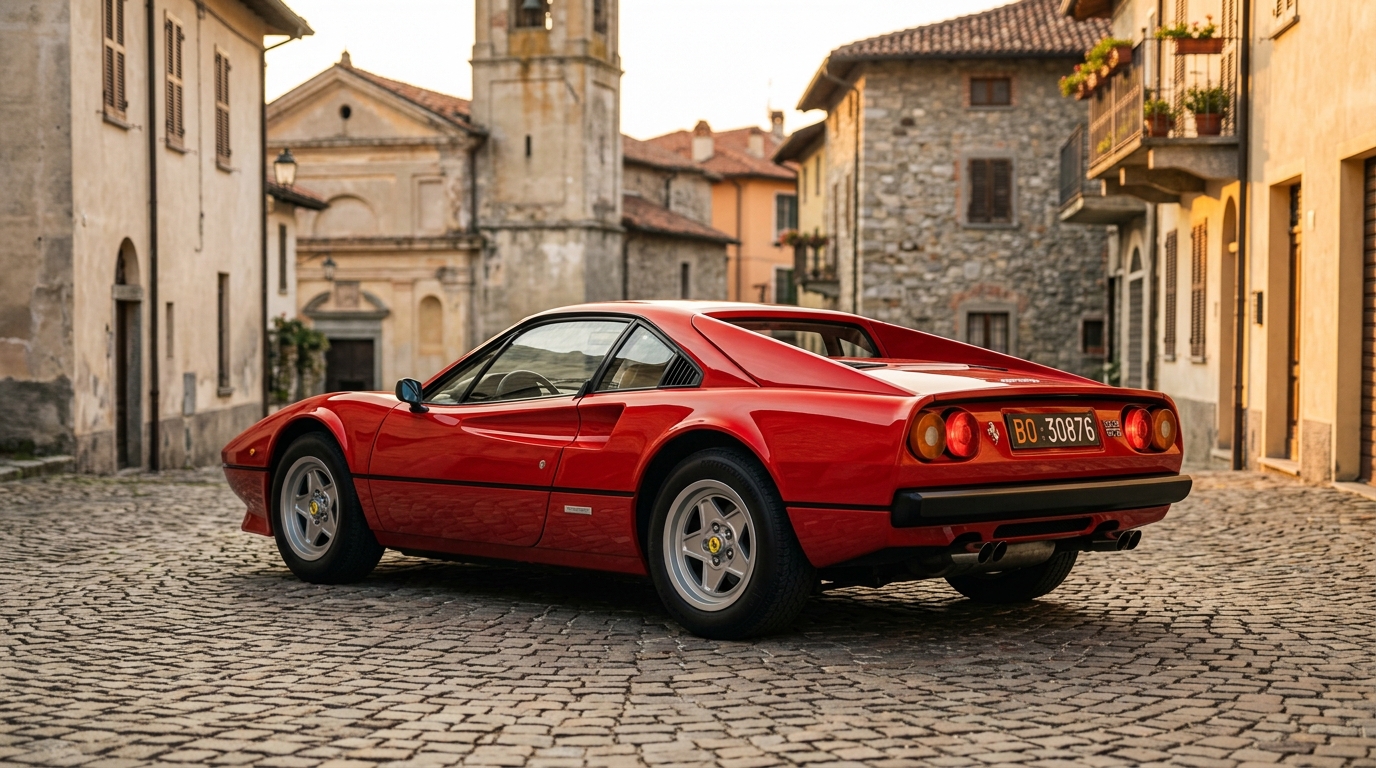
The Vetroresina: Ferrari's Only Fiberglass Production Car
When Ferrari launched the 308 GTB in 1975 as the replacement for the Dino 246 GT, they faced a problem: the car needed to reach market quickly, and hand-beating steel bodies in aluminum was too slow and expensive for the projected volume. The solution was vetroresina — Italian for fiberglass. Ferrari contracted Scaglietti to build the first 308 GTB bodies in fiberglass, a material Ferrari had never used for a production road car and would never use again. The vetroresina cars were built from 1975 through mid-1977, after which Ferrari switched to steel bodies. The result is one of the most distinctive and collectible Ferraris of the 1970s.
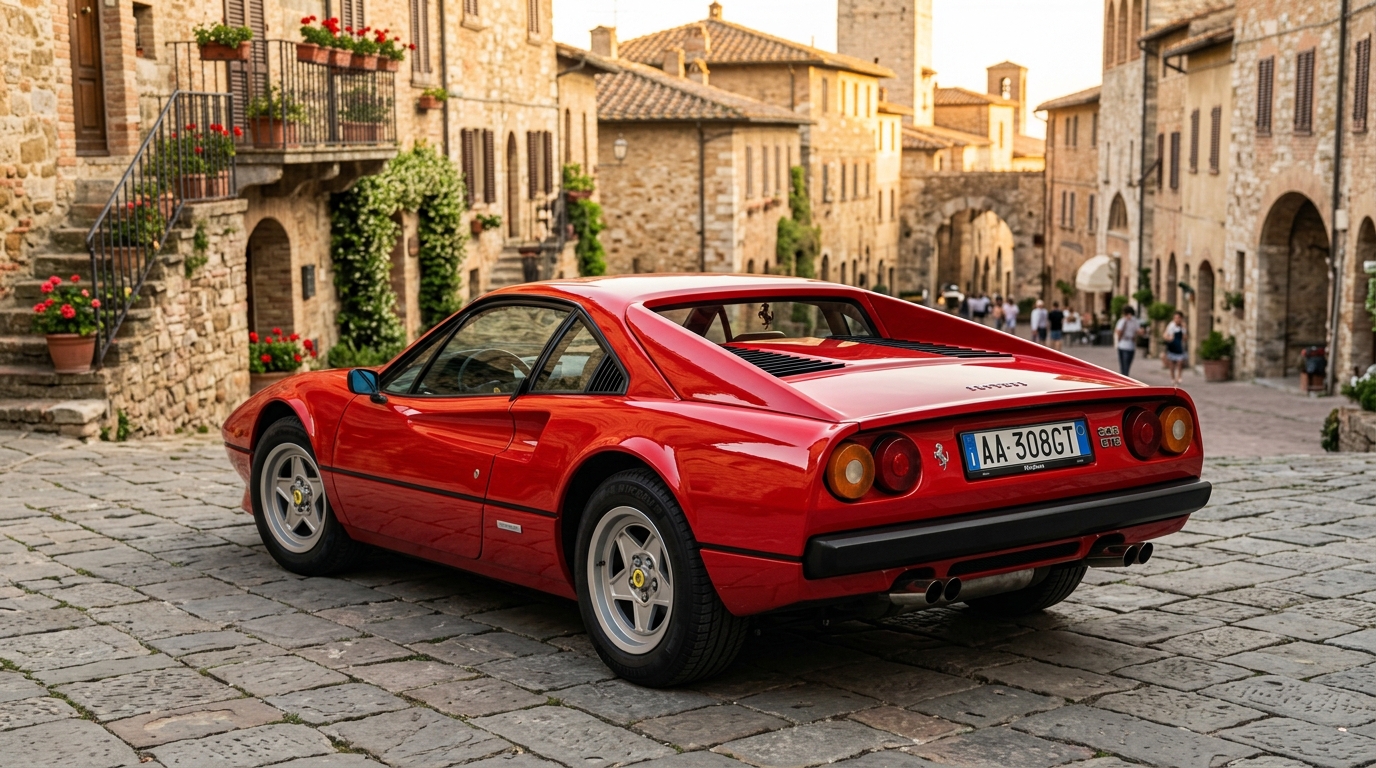
The production figure for vetroresina 308 GTBs is one of Ferrari's great unresolved mysteries. Ferrari historian Marcel Massini and multiple marque specialists cite 712 cars. Ferrari's own factory records claim 808. The 308 GTB Register notes that the 712 figure may originate from counting only certain chassis number ranges, while the 808 figure comes from subtracting known steel-body production (2,185) from total carbureted 308 GTB production (2,993). Ferrari has never officially clarified the discrepancy. Both numbers are widely cited — we present both and acknowledge the uncertainty.
Why Vetroresina Cars Are Worth More
The vetroresina 308 GTBs command a 50-100% premium over equivalent steel-bodied cars. Three factors drive this premium: rarity (712-808 vs 2,185 steel cars), weight (fiberglass bodies are 120-150 lb lighter), and historical significance (Ferrari's only fiberglass production car). The weight difference is not trivial — it transforms the driving experience. The vetroresina cars feel more responsive, more eager to change direction, and more like the Dino 246 that preceded them. Steel-bodied cars feel heavier and more settled, which some prefer for touring but which is less engaging on a winding road.
| Specification | Vetroresina (Fiberglass) | Steel-Bodied |
|---|---|---|
| Production | ~712 (historian) / 808 (factory) | ~2,185 |
| Years | 1975-mid 1977 | mid 1977-1980 |
| Body Material | Fiberglass (vetroresina) | Steel |
| Weight (Euro, dry-sump) | ~1,080 kg (2,381 lb) | ~1,230 kg (2,712 lb) |
| Weight (US, wet-sump) | ~1,150 kg (2,535 lb) | ~1,250 kg (2,756 lb) |
| Engine | 2.9L DOHC V8, 4 Weber 40 DCNF | Same |
| Power (Euro) | 255 HP @ 7,700 rpm | 255 HP @ 7,700 rpm |
| Power (US) | 205 HP @ 6,600 rpm | 205 HP @ 6,600 rpm |
| Lubrication (Euro) | Dry sump | Dry sump |
| Lubrication (US) | Wet sump (~100 cars) | Wet sump |
| 0-60 mph | 6.5 sec (Euro) | 7.2 sec (Euro) |
| Top Speed | 159 mph (Euro) | 154 mph (Euro) |
| #1 Condition Value | $180,000-$250,000 | $120,000-$170,000 |
| #2 Condition Value | $130,000-$180,000 | $70,000-$100,000 |
The vetroresina cars are 120-150 lb lighter than steel cars, which translates to faster acceleration, higher top speed, and a more engaging driving experience. Values reflect a 50-100% premium for fiberglass. Data: Hagerty, 308 GTB Register.
How to Identify a Vetroresina in 10 Seconds
Telling a vetroresina 308 GTB from a steel-bodied one is straightforward if you know where to look. The differences are visible without any tools or disassembly:
- Door jamb finish — Open the door and look at the inner jamb. Vetroresina cars have a matte, unpainted fiberglass finish (grayish-white). Steel cars have smooth body-color painted finish in the jamb.
- This is the single fastest identification method
- Fiberglass has a visible weave texture
- Steel is smooth and painted
- Wheel arch seams — Look along the inner edge of the wheel arches. Vetroresina cars have a raised fiberglass seam where the body panels were joined. Steel cars have welded seams that are ground smooth and painted.
- The seam is visible on both front and rear arches
- It looks like a raised ridge of fiberglass
- Steel cars have no visible seam
- Engine bay finish — Look inside the engine bay at the inner fender panels. Vetroresina cars show raw fiberglass with a gel coat. Steel cars show painted body-color panels.
- Gel coat is a matte finish, not glossy
- Fiberglass weave may be visible in some areas
- Body number stamping — Steel-bodied 308 GTBs have a steel body number stamped on a metal tag riveted to the inner fender. Vetroresina cars do not have this tag because the body is fiberglass.
- Look for a metal tag on the inner right fender
- Absence of the tag indicates vetroresina
- Some vetroresina cars have hand-written numbers in marker
- Hood and decklid — Vetroresina hood and decklid have a slightly different sound when tapped — a duller, softer sound than steel. The fiberglass panels also have a slightly different fit at the edges.
- Tap the hood gently — fiberglass sounds dull
- Steel rings with a higher pitch
- Panel gaps may be slightly wider on vetroresina
Open the driver's door. Look at the inner jamb. If it is matte grayish fiberglass with a visible weave, it is a vetroresina. If it is smooth and painted body color, it is a steel car. This single check takes 10 seconds and is 99% reliable. For the remaining 1%, check the wheel arch seams and engine bay finish.
US vs European Vetroresina: Wet Sump vs Dry Sump
Not all vetroresina 308 GTBs are the same. European-market cars use dry-sump lubrication, which allows the engine to sit lower in the chassis (improving center of gravity) and produces 255 HP. US-market cars use wet-sump lubrication to meet emissions regulations, which raises the engine slightly and reduces output to 205 HP. Only approximately 100 US-spec vetroresina cars were built, making them the rarest 308 GTB variant.
| Variant | Production | Lubrication | HP | Torque | Value Premium |
|---|---|---|---|---|---|
| Euro Vetroresina (dry sump) | ~612-708 | Dry sump | 255 HP | 179 lb-ft | Baseline (highest value) |
| US Vetroresina (wet sump) | ~100 | Wet sump | 205 HP | 166 lb-ft | -10-15% vs Euro (despite rarity, lower HP) |
| Euro Steel (dry sump) | ~1,200 | Dry sump | 255 HP | 179 lb-ft | -50% vs vetroresina |
| US Steel (wet sump) | ~600 | Wet sump | 205 HP | 166 lb-ft | -60% vs vetroresina |
The Euro dry-sump vetroresina is the most desirable 308 GTB variant. The US wet-sump vetroresina is the rarest (~100 cars) but commands a lower price than the Euro because of the reduced power output. Production figures are estimates — Ferrari has never released an official breakdown.
Buying Guide: What to Check
- Verify vetroresina authenticity — Use the 10-second door jamb test. Also check for a Ferrari Classiche certification, which confirms the body material and originality.
- Door jamb: matte fiberglass = vetroresina
- Ferrari Classiche certification is the gold standard
- Cost of certification: ~$3,000-$5,000
- Chassis number range — Vetroresina cars have chassis numbers in the range 18677-21289. Steel cars start at approximately 20805. There is overlap in the transition period.
- Vetroresina: s/n 18677-21289 (approximate)
- Steel: s/n 20805-34329 (approximate)
- Overlap period (mid-1977) requires visual verification
- Timing belt — The 308 GTB has an interference engine. If the timing belt breaks, pistons hit valves. Belt replacement interval is 5 years or 30,000 miles. Budget $1,500-$2,500.
- Check when the belt was last replaced
- A car with an unknown belt history is a risk
- Budget for immediate belt replacement if unknown
- Fiberglass condition — Check for cracks, delamination, and previous repairs. Fiberglass cracks are repairable but should be done by a specialist. Poor repairs are visible as uneven gel coat.
- Look for hairline cracks around stress points
- Check for bubbles in the gel coat (delamination)
- Previous repairs may show as color mismatch
- Weber carburetors — The 40 DCNF carburetors need synchronization every 5,000 miles. Poor sync causes rough idle and flat spots. Budget $400-$800 for carb service.
- Listen for uneven idle (carb sync issue)
- Check for flat spots on acceleration
- Weber rebuild kits: $200-$400
- Rust — Vetroresina bodies do not rust, but the steel chassis frame does. Check the frame rails, floor pans, and suspension pickup points. Frame rust is the most serious issue.
- Fiberglass body does not rust
- Steel chassis frame CAN rust
- Check frame rails with flashlight
The 308 GTB Vetroresina is one of the most undervalued Ferraris. At $130,000-$180,000 (#2 condition), it is significantly cheaper than a Daytona ($400K+), 246 Dino ($300K+), or 512 BB ($250K+), yet it is rarer than all of them (712-808 vs 1,400+ Dinos). The vetroresina is Ferrari's only fiberglass production car, has documented racing heritage, and is the purest expression of the 308 platform. Values have appreciated 5-8% annually and are expected to accelerate as the 308 becomes recognized as a blue-chip Ferrari.
Considering a Ferrari 308 GTB purchase? Get an AI-powered valuation based on real auction data before you buy.
Get AI ValuationSources & References
- 308 GTB Register — Production Numbers — The definitive resource for 308 GTB production figures, including the 712 vs 808 controversy
- Hagerty — 308 GTB Buyer's Guide — Hagerty's comprehensive buyer's guide covering vetroresina vs steel, values, and what to look for
- Silodrome — Ferrari 308 GTB Vetroresina — Detailed history of the vetroresina, including the 712 production figure and its origins
- Related: Best Classic Cars Under $200K (2026) — The 308 GTB Vetroresina appears in our $200K investment guide
- Related: Classic Car Investment Guide 2026 — Portfolio allocation strategies including European sports cars
- Related: Matching Numbers Explained — Classic Car Value — How matching numbers and provenance affect Ferrari values
- Related: Vintage Car Appraisal Guide 2026 — Professional appraisal methodology for investment-grade European classics