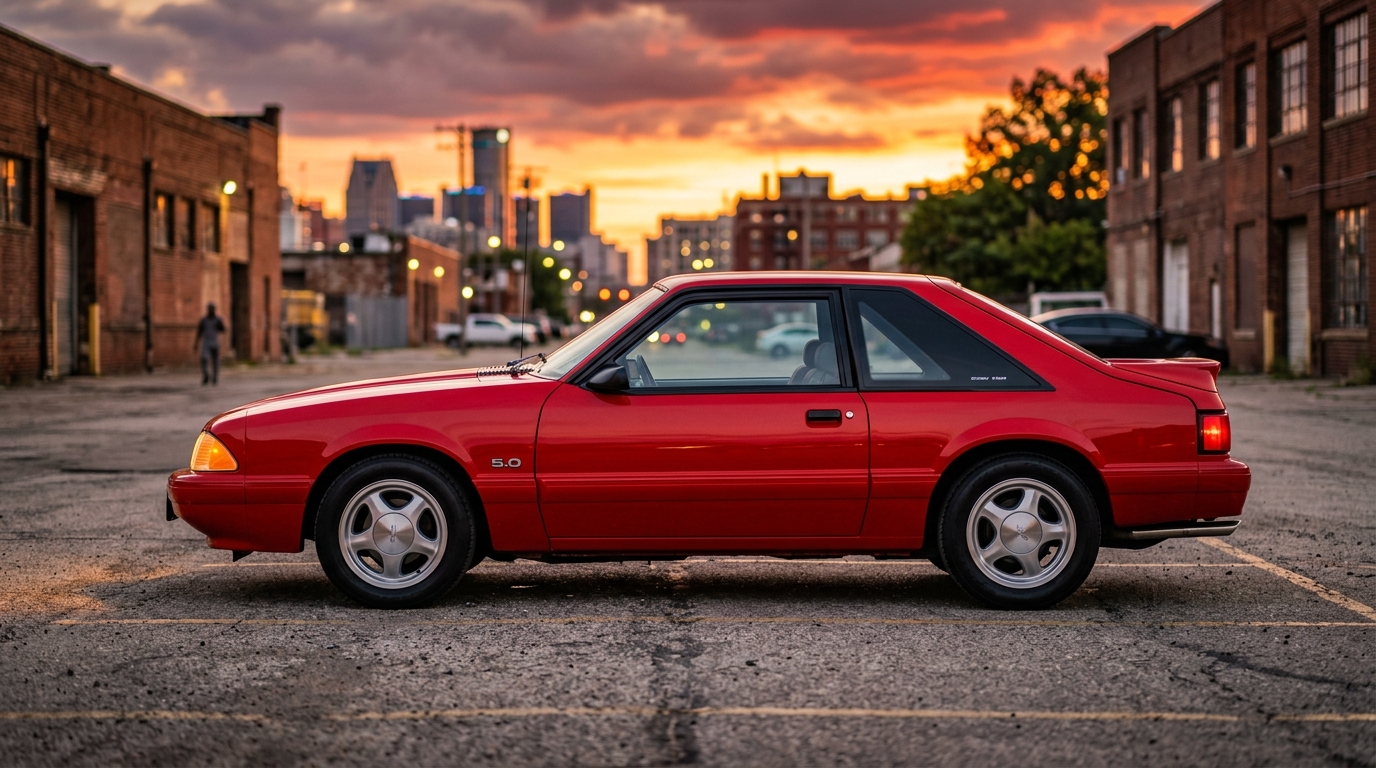
The Ford Fox Body Mustang was produced from 1979 to 1993 on the Fox platform shared with the Fairmont and Mercury Zephyr. The generation spans three distinct eras: 1979–1982 (malaise-era 4-cylinder and 5.0L), 1983–1986 (high-output 5.0L, SVO turbo, GT revival), and 1987–1993 (refined 225hp 5.0L HO, the most collectible years). The 1993 SVT Cobra and limited-production Cobra R are the most valuable variants, with #2 condition examples trading at $45,000–$70,000. The 1986–1993 5.0L LX hatchback is the best value buy — same drivetrain as the GT for 20–30% less money.
Three Eras of the Fox Body
The Fox Body Mustang's 15-year production run spans three distinct eras with dramatically different performance, styling, and collectibility profiles. Understanding these eras is essential for valuation — a 1980 Mustang and a 1990 Mustang share a platform but are fundamentally different vehicles.
| Era | Years | Key Engines | Defining Features | Collectibility |
|---|---|---|---|---|
| Malaise Era | 1979–1982 | 2.3L I4 (88hp), 5.0L V8 (130–140hp) | Four-eye front end, 4-cylinder base, low power, emissions-choked V8 | Low — except 1979 Indy Pace Car |
| Revival Era | 1983–1986 | 5.0L HO (175–205hp), 2.3L Turbo SVO (175–200hp) | Aero front end, GT returns, SVO turbo, T-top availability | Medium — SVO and 1985–1986 GT are rising |
| Golden Era | 1987–1993 | 5.0L HO (225hp), 5.0L Cobra (235hp) | Refined aero front, composite headlights, 225hp standard, SVT Cobra | High — 1987–1993 LX/GT are the most collected |
The three eras correspond to major styling and mechanical updates. The 1987 facelift (composite headlights, refined interior) is the dividing line between Revival and Golden eras.
Production Numbers by Year
| Year | Total Production | GT Production | Convertible | Notes |
|---|---|---|---|---|
| 1979 | ~370,000 | N/A (introduced 1982) | N/A (introduced 1983) | Pace Car edition: 10,478 units |
| 1980 | ~275,000 | N/A | N/A | Lowest V8 output (130hp) |
| 1981 | ~230,000 | N/A | N/A | 4.2L V8 (120hp) — worst performing year |
| 1982 | ~210,000 | ~50,000 | N/A | GT returns with 157hp 5.0L HO |
| 1983 | ~245,000 | ~75,000 | ~25,000 | Convertible returns after 10-year absence |
| 1984 | ~265,000 | ~80,000 | ~30,000 | SVO introduced (175hp turbo 2.3L) |
| 1985 | ~245,000 | ~85,000 | ~28,000 | GT gets 205hp roller-cam HO engine |
| 1986 | ~235,000 | ~80,000 | ~27,000 | Sequential EFI replaces carburetor; 200hp |
| 1987 | ~280,000 | ~95,000 | ~35,000 | Facelift: composite headlights, 225hp HO |
| 1988 | ~260,000 | ~90,000 | ~30,000 | T-tops discontinued after 1988 |
| 1989 | ~245,000 | ~85,000 | ~28,000 | Mass air flow sensor replaces speed density |
| 1990 | ~220,000 | ~75,000 | ~25,000 | Driver-side airbag added |
| 1991 | ~200,000 | ~70,000 | ~22,000 | Pony wheels standard on GT |
| 1992 | ~180,000 | ~60,000 | ~20,000 | Limited production year; slow sales |
| 1993 | ~175,000 | ~55,000 | ~18,000 | SVT Cobra (107) & Cobra R (107) — final year |
Production data from Ford Motor Company production reports and Mustang Club of America archives. 1979–1981 GT figures are estimated as Ford did not break out GT production separately until 1982.
Engine Specifications
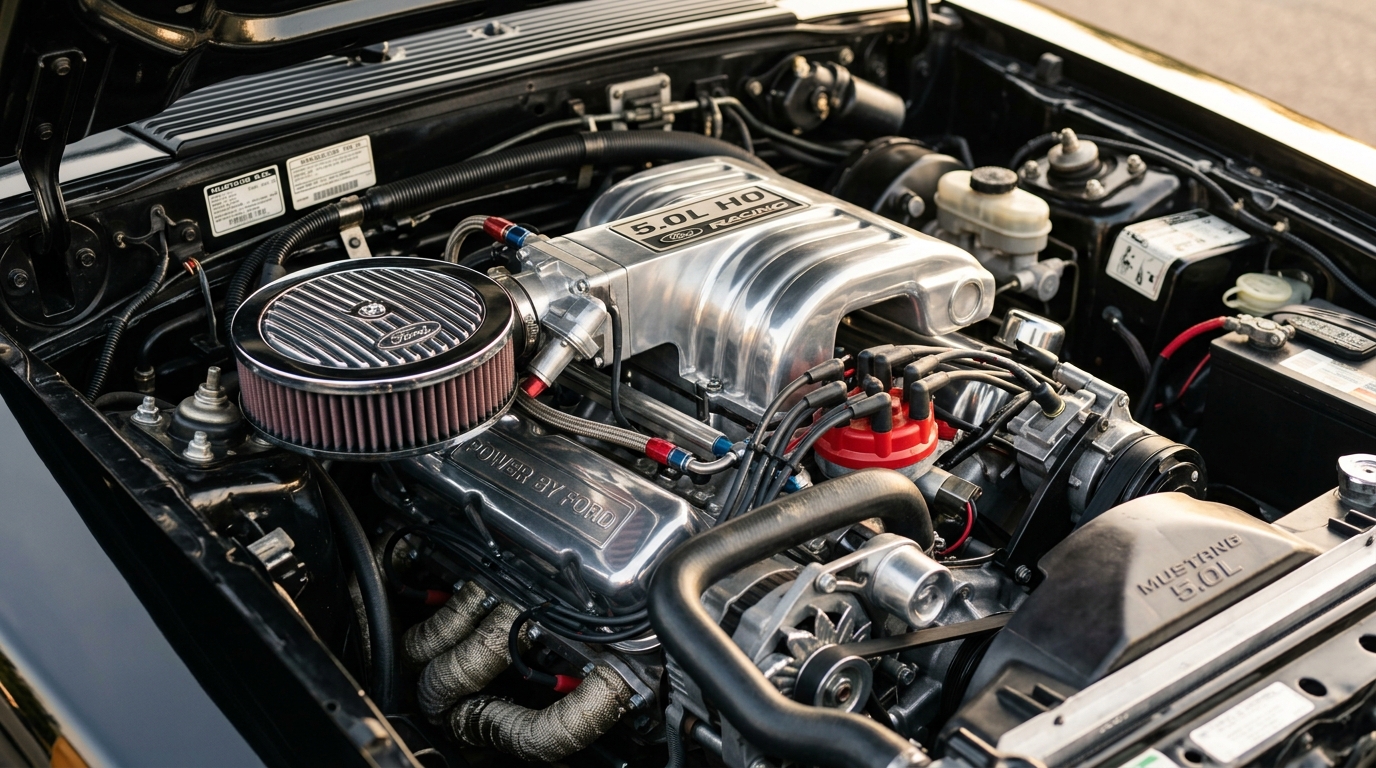
The Fox Body Mustang was offered with 8 different engines over its 15-year run. The 5.0L High Output (HO) V8 is the engine that defines the generation and the one most sought after by collectors.
| Engine | Displacement | Years | HP | Torque | Notes |
|---|---|---|---|---|---|
| 2.3L Lima I4 | 140ci | 1979–1993 | 88–105 | 110–135 | Base engine; reliable but slow |
| 2.3L Turbo I4 | 140ci | 1979–1981, 1983–1984 | 130–175 | 170–195 | Early turbos unreliable; SVO version much better |
| 2.8L Cologne V6 | 171ci | 1979–1980 | 109 | 154 | Imported from Capri; quickly dropped |
| 3.3L Thriftpower I6 | 200ci | 1979–1981 | 85 | 154 | Last inline-six in a Mustang |
| 4.2L Windsor V8 | 255ci | 1980–1981 | 120 | 250 | Worst V8 in Mustang history; avoid |
| 5.0L Windsor V8 | 302ci | 1979, 1982 | 130–157 | 245–265 | Pre-HO; 2-barrel carburetor |
| 5.0L HO V8 | 302ci | 1983–1993 | 175–225 | 245–300 | The definitive Fox Body engine |
| 5.0L Cobra V8 | 302ci | 1993 | 235 | 280 | GT40 heads, Cobra intake; SVT only |
The 5.0L HO evolved significantly: 175hp (1983) → 205hp (1985) → 200hp (1986 EFI) → 225hp (1987–1993). The 1987–1993 HO with speed density (1987–1988) or mass air (1989–1993) is the most desirable.
Trim Level Matrix
| Trim | Years | Engine | Key Features | Value Impact |
|---|---|---|---|---|
| L | 1979–1981 | 2.3L I4 / 3.3L I6 | Base model, minimal options | Baseline (lowest) |
| GL | 1979–1981 | 2.3L I4 / 2.8L V6 | Added trim, upgraded interior | +5–10% |
| GLX | 1982–1984 | 5.0L V8 / 5.0L HO | Luxury-oriented, full gauges | +10–15% |
| LX | 1984–1993 | 2.3L I4 / 5.0L HO | Base luxury; 5.0L LX = sleeper | +15–30% (5.0L LX) |
| GT | 1982–1993 | 5.0L HO | Performance: fog lights, spoiler, sport seats | +20–35% |
| SVO | 1984–1986 | 2.3L Turbo I4 | Turbo, 4-wheel disc, 16" wheels, aero nose | +40–60% |
| Saleen | 1984–1993 | 5.0L HO | Race-tuned suspension, body kit, numbered | +50–80% |
| SVT Cobra | 1993 | 5.0L Cobra | GT40 heads, Cobra intake, 17" wheels | +60–100% |
| SVT Cobra R | 1993 | 5.0L Cobra | Track-only: no rear seat, A/C, radio; 107 built | +200–300% |
The LX 5.0L is the enthusiast's value play — identical drivetrain to the GT but ~$5,000–$10,000 less in equivalent condition. The SVO is the tech darling. The Cobra R is the unicorn.
Market Values by Condition (2026)
Fox Body Mustang values have appreciated significantly since 2020, driven by 1980s/1990s nostalgia and the 5.0L engine's legendary status. Values vary dramatically by year, trim, and body style:
| Variant | #1 Concours | #2 Excellent | #3 Good | #4 Fair | 5-Year Trend |
|---|---|---|---|---|---|
| 1979 Pace Car (5.0L) | $35,000 | $22,000 | $12,000 | $5,000 | +35% |
| 1982 GT 5.0L HO | $28,000 | $18,000 | $9,000 | $3,500 | +30% |
| 1984–1986 SVO | $45,000 | $28,000 | $15,000 | $6,000 | +45% |
| 1987–1993 GT 5.0L | $40,000 | $25,000 | $14,000 | $5,000 | +40% |
| 1987–1993 LX 5.0L Hatch | $32,000 | $20,000 | $11,000 | $4,000 | +35% |
| 1987–1993 LX 5.0L Convertible | $38,000 | $24,000 | $13,000 | $5,000 | +38% |
| 1993 SVT Cobra | $70,000 | $45,000 | $28,000 | $12,000 | +55% |
| 1993 SVT Cobra R | $120,000 | $80,000 | $50,000 | $25,000 | +70% |
| Saleen #1–#10 (early) | $55,000 | $35,000 | $20,000 | $8,000 | +50% |
| Base 2.3L (any year) | $15,000 | $8,000 | $4,000 | $1,500 | +15% |
Values are 2026 market estimates based on Bring a Trailer, Mecum, and Barrett-Jackson sales data. Cobra R values are based on very limited transaction data (107 built, ~60 known to survive).
Value Trend Chart (2020–2026)
Fox Body Mustang Average Values (1987–1993 GT 5.0L, #2 Condition)
| 2020 | 2021 | 2022 | 2023 | 2024 | 2025 | 2026 | |
|---|---|---|---|---|---|---|---|
| GT 5.0L (#2) | 16000 | 18000 | 21000 | 23000 | 24000 | 25000 | 25000 |
| LX 5.0L (#2) | 12000 | 14000 | 16000 | 18000 | 19000 | 20000 | 20000 |
| SVO (#2) | 18000 | 22000 | 25000 | 27000 | 28000 | 28000 | 28000 |
Key Option Codes (RPO)
Fox Body Mustang RPO Codes
| Code | Name / Description |
|---|---|
489 | 5.0L HO V8 Engine 225hp (1987–1993); the most desirable engine option |
498 | 2.3L Turbo I4 (SVO) 175–200hp intercooled turbo; SVO only |
895 | 5-Speed Manual (T-5) Borg-Warner T-5; preferred over AOD automatic |
893 | 4-Speed Automatic (AOD) 4-speed overdrive; ~10–15% value reduction vs T-5 |
621 | Trac-Lok Limited Slip Positraction rear axle; essential for performance |
410 | 3.08 Rear Axle Ratio Standard on GT; good balance of acceleration and cruising |
420 | 3.55 Rear Axle Ratio Optional; better acceleration, lower top speed |
430 | 3.73 Rear Axle Ratio Performance ratio; common on SVO and Cobra |
60B | Sport Interior Recaro-style seats, center console, full gauges |
65B | Premium Interior Upgraded cloth/vinyl, door panel inserts |
373 | Hatchback Body Most common and most practical; preferred by enthusiasts |
374 | Notchback (Coupe) Body Least common body style; some prefer the clean look |
57F | Convertible Introduced 1983; ~15% of production; premium pricing |
How to Verify an Original Fox Body
- Check the door data plate (Ford bucktag)
- Located on driver-side door jamb
- Contains body code, engine code, transmission code, axle ratio, and build date
- Verify the engine code matches what's currently in the car
- Verify the VIN matches the title and engine
- 17-digit VIN starts with 1FABP or 1FABP2 for 5.0L
- Position 8 = engine code (H = 5.0L HO, A = 2.3L, T = 2.3L Turbo)
- Engine block stamping should match VIN suffix
- Check for Saleen or SVO authenticity
- Saleen: verify Saleen serial number on door jamb plaque and title
- SVO: check for intercooler, 16" wheels, quad shocks, and SVO-specific interior
- Cobra: verify SVT certificate and Cobra-specific intake/heads
- Inspect for common Fox Body rust areas
- Torque boxes (rear suspension mounting points) — critical structural
- Floor pans, especially under driver seat
- Lower quarter panels behind rear wheels
- Hatch/lower tail panel area
- Frame rails near torque box reinforcement
The Fox platform's rear torque boxes (where the upper and lower control arms mount to the body) are the #1 structural rust area. If the torque boxes are rusted through, the rear suspension can tear from the body under hard acceleration. Repair costs $3,000–$8,000 per side. Always inspect torque boxes before purchase — many sellers don't even know this is a problem.
Modifications and Value Impact
The Fox Body Mustang is one of the most modified vehicles ever made. The 5.0L engine is incredibly responsive to bolt-on modifications. However, modifications have a complex relationship with value:
| Modification | Cost | Value Impact | Notes |
|---|---|---|---|
| Original/Stock | — | Highest value | Unmodified 5.0L HO cars command 20–40% premium |
| Period-correct mods (cylinder heads, cam) | $2,000–$5,000 | Neutral to +5% | Acceptable if done well; keep original parts |
| Modern EFI conversion (EFI to carb or vice versa) | $1,500–$3,000 | −10 to −15% | Purists dislike; reduces originality |
| LS swap | $8,000–$15,000 | −20 to −30% | Better performance but kills collector value |
| Coyote 5.0 swap | $10,000–$20,000 | −15 to −25% | Popular restomod; value depends on execution quality |
| Roll cage / track build | $2,000–$8,000 | −30 to −50% | Racing modifications destroy street value |
| Repaint in non-original color | $3,000–$8,000 | −10 to −20% | Original color verified by door tag always preferred |
The Fox Body market strongly favors originality. A stock 1987–1993 GT 5.0L in original paint with documentation is worth more than a heavily modified one with $15,000 in aftermarket parts.
Buying Guide: Best Years and Variants
- Best investment: 1993 SVT Cobra
- 107 produced; values already at $45,000–$70,000 (#2)
- Only 5,000 total Cobra models; appreciating 15–20% per year
- Requires SVT authentication certificate
- Best value: 1987–1993 LX 5.0L Hatchback
- Same 225hp 5.0L HO and T-5 transmission as GT
- 20–30% cheaper than equivalent GT
- Sleeper look appeals to enthusiasts; rising in value
- Best driver: 1989–1993 GT 5.0L Convertible
- Mass air flow (1989+) is more tuner-friendly
- Convertible adds $3,000–$5,000 over hatch
- 225hp is plenty for open-top cruising
- Best rarity: 1984–1986 SVO
- Intercooled 2.3L turbo, 4-wheel disc brakes, 16" wheels
- 9,799 total produced; ~3,000 survive
- Appreciating faster than any other Fox Body variant
- Avoid: 1980–1981 with 4.2L V8
- 120hp — slower than the 2.3L I4 in some tests
- Lowest point in Mustang performance history
- Minimal collector interest; values flat
Frequently Asked Questions
- What is the difference between LX 5.0L and GT?
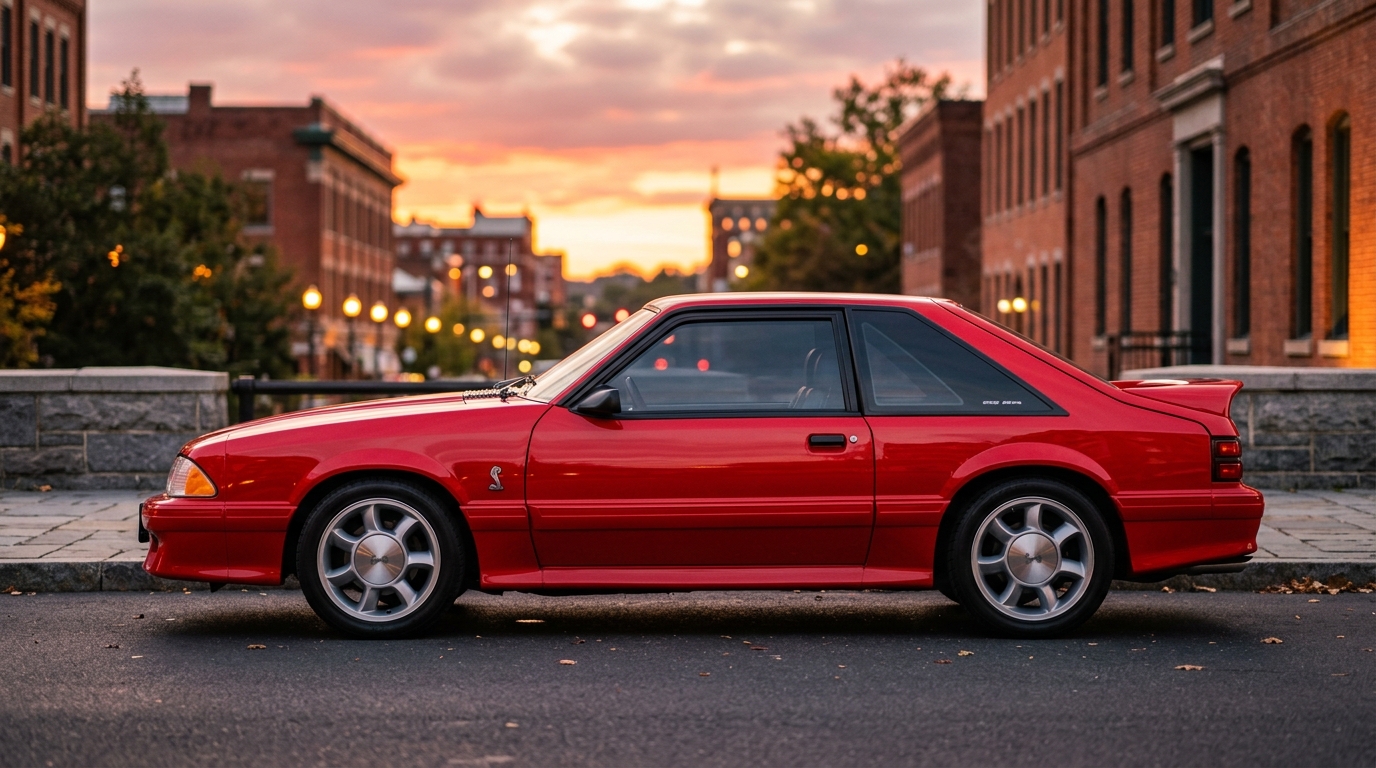
- Mechanically identical: same 225hp 5.0L HO engine, same T-5 transmission, same 8.8" rear axle. The GT adds: fog lights, rear spoiler, sport seats, and different wheels. The LX 5.0L is a "sleeper" — looks like a base model but performs like a GT.
- How can I tell if a Cobra is real?
- 1993 SVT Cobras came with an SVT authentication certificate (often lost). Verify: Cobra-specific intake manifold (GT40), Cobra rear bumper, 17" Cobra R wheels, and unique VIN sequence. Contact SVT with the VIN to confirm production records.
- Are 4-cylinder Fox Bodies worth anything?
- The 2.3L naturally aspirated models are the least valuable — $4,000–$8,000 in #3 condition. The 2.3L Turbo SVO is the exception, worth $15,000–$28,000 in #3 condition. A clean, original 2.3L LX is a cheap entry point to Fox Body ownership.
- What's the best rear gear ratio?
- 3.08 was standard on GT and is the best all-around ratio. 3.55 is better for acceleration. 3.73 is for track/street performance. 2.73 (base) is too tall for the 5.0L — avoid unless you plan to change it.
- Should I buy a Fox Body as an investment?
- The 1987–1993 5.0L cars are appreciating 8–12% annually. The SVO and Cobra are appreciating faster (15–20%). However, the market is thinner than C10 trucks — fewer buyers at the top end. Buy one because you love it, not purely as an investment.
Get an AI-powered valuation for your Fox Body Mustang — free, instant, based on real auction data.
Value My MustangSources & References
- Hagerty Price Guide — Valuation Tools — Independent valuation data by condition grade #1-#4
- Bring a Trailer — Auction Results — Real-world auction sale prices for market comparison
- Related: Squarebody C10 Generation Hub — In-depth related guide from our editorial library
- Related: Restoration Cost Calculator — In-depth related guide from our editorial library
- Related: Nada Classic Values Cross Reference — In-depth related guide from our editorial library