The Homologation Special That Became a Legend
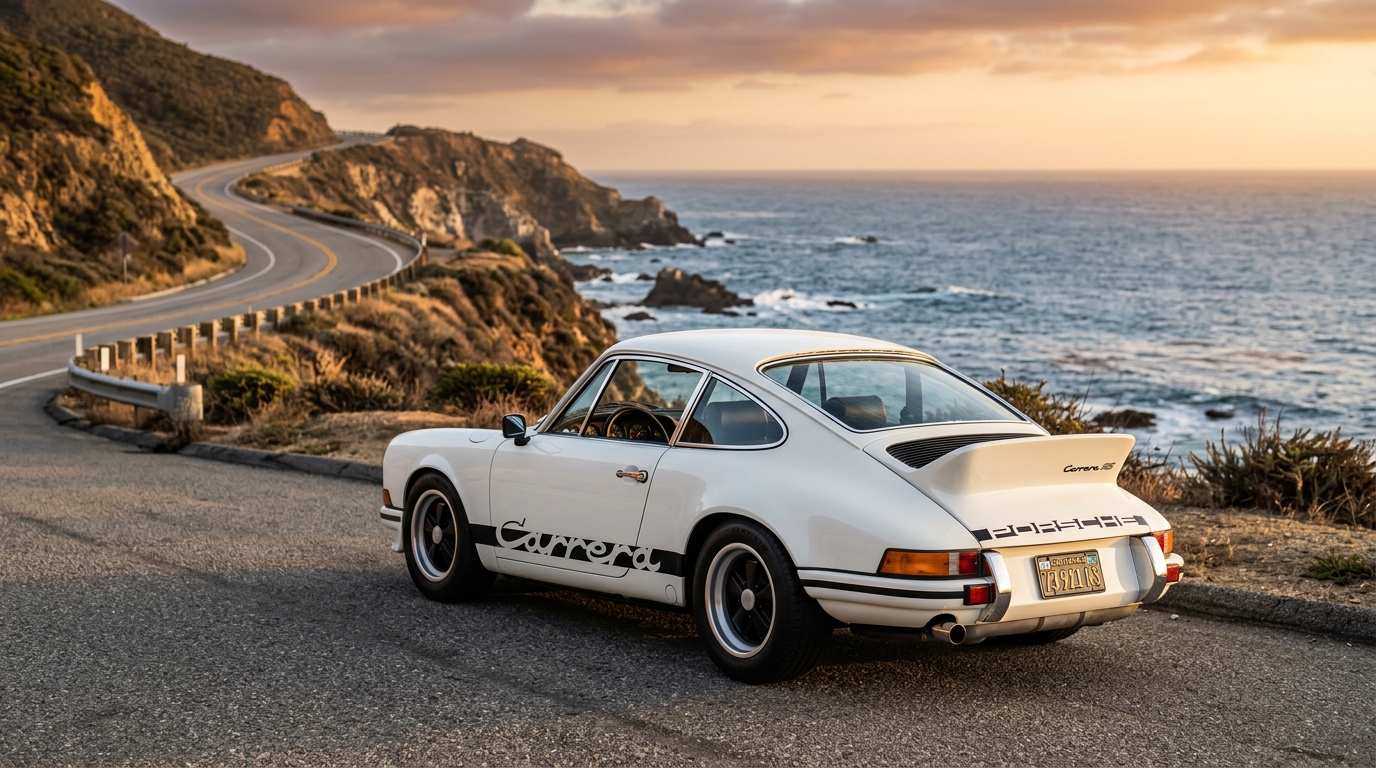
The Porsche 911 Carrera RS 2.7 exists because of a racing rule. To homologate the 911 for Group 4 Special GT racing, Porsche needed to build 500 road-going examples. Porsche's sales boss was skeptical — he thought selling ten would be a struggle. He was wrong. After the car debuted at the Paris Motor Show on October 5, 1972, all 500 planned units sold out by the end of November. Porsche tripled production, and by July 1973, 1,580 Carrera RS 2.7s had been built. The car introduced the "ducktail" rear spoiler — the first rear spoiler on a production road car — and established the RS (Rennsport, or "racing sport") designation that Porsche still uses today.
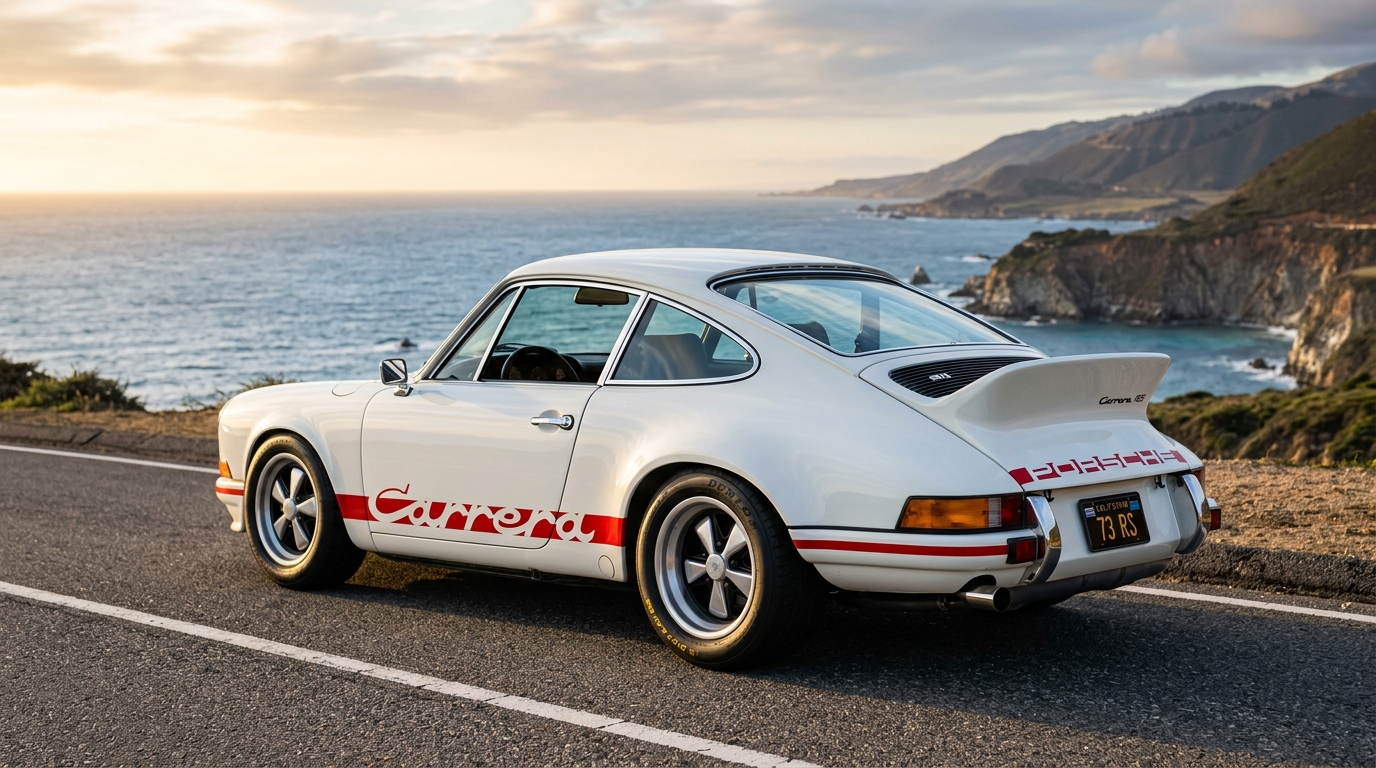
The total production of 1,580 Carrera RS 2.7s is confirmed by multiple independent sources, including the Porsche Newsroom (2022 50th anniversary article), Chassis Counter, and IMSA. The breakdown: 200 Lightweight (M471 Sport), 1,308 Touring (M472), 55 racing versions, and 17 base vehicles. Porsche originally planned 500 units for homologation; the 1,000th car triggered homologation for both Group 3 and Group 4.
Lightweight (M471) vs Touring (M472): What's the Difference?
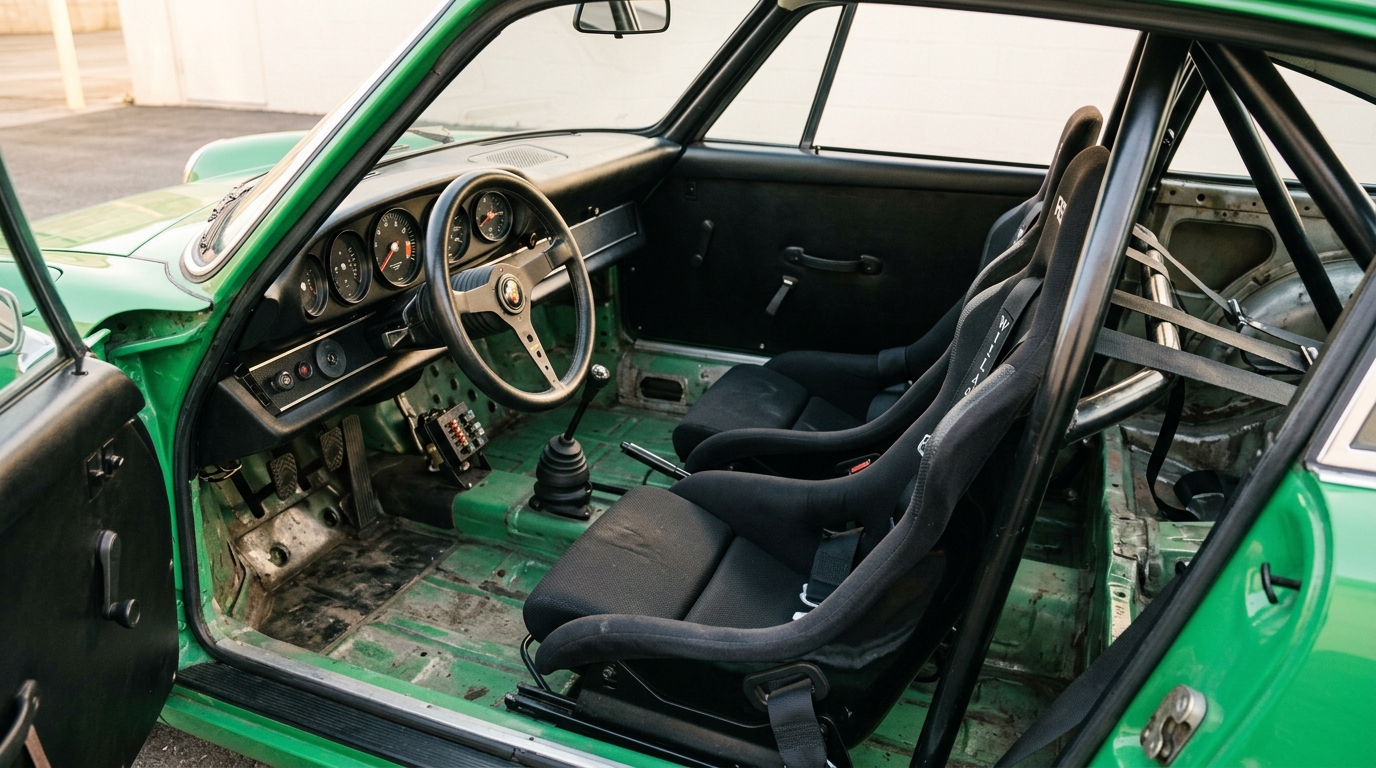
The Carrera RS 2.7 was offered in two primary customer specifications, defined by equipment packages: M471 (Sport/Lightweight) and M472 (Touring). The Lightweight was built for racing — stripped of every unnecessary component to achieve a kerb weight of just 960 kg. The Touring was built for road use — retaining comfort features while still benefiting from the RS engine and suspension. The 115 kg weight difference between them is the result of systematic weight reduction on the Lightweight.
| Feature | Lightweight (M471) | Touring (M472) |
|---|---|---|
| Production | 200 cars | 1,308 cars |
| Kerb Weight | 960 kg (2,116 lb) | 1,075 kg (2,370 lb) |
| Rear Seats | Removed | Present |
| Carpets | Removed | Present |
| Clock | Removed | Present |
| Coat Hooks | Removed | Present |
| Door Armrests | Removed | Present |
| Rear Bumper | Plastic | Steel |
| Window Glass | Thin glass | Standard glass |
| Insulation | Removed | Present |
| Seats | Lightweight bucket shells (on request) | Sports seats with corduroy inserts |
| Porsche Crest (hood) | Initially glued on (to save weight) | Standard mounted |
| Price (1973) | DM 34,000 | DM 33,500 (M472 package: +DM 2,500) |
| #1 Value (2026) | $800,000-$1,200,000 | $400,000-$600,000 |
| #2 Value (2026) | $500,000-$700,000 | $300,000-$450,000 |
The Lightweight (M471) is 115 kg lighter than the Touring and commands roughly double the value. 200 Lightweights vs 1,308 Tourings means the Lightweight is 6.5x rarer. Data: Porsche Newsroom, Hagerty.
Engine and Performance Specs
| Specification | Value |
|---|---|
| Engine Type | Type 911/83, air-cooled flat-6 (boxer) |
| Displacement | 2,687 cc |
| Bore x Stroke | 90 x 70.4 mm |
| Compression Ratio | 9.8:1 |
| Power | 210 HP @ 6,300 rpm |
| Torque | 188 lb-ft @ 5,100 rpm |
| Fuel System | Mechanical fuel injection (Bosch Kugelfischer) |
| Gearbox | 5-speed manual, middle shift (Type 915) |
| 0-100 km/h (Lightweight) | 5.6 seconds |
| 0-100 km/h (Touring) | 6.1 seconds |
| Top Speed | 245 km/h (152 mph) |
| Brakes | Disc brakes front and rear |
| Wheels | Fuchs 15-inch, 6J front / 7J rear |
| Tires | Front 185/70 VR15, Rear 215/60 VR15 |
| Rear Track | 42 mm wider than standard 911 |
The RS 2.7 engine (Type 911/83) produces 210 HP from 2,687 cc — a specific output of 78 HP/liter, remarkable for an air-cooled engine in 1973. The wider rear track (42 mm per side) accommodates the larger rear wheels and tires.
The Ducktail: Why It Matters
The ducktail spoiler on the Carrera RS 2.7 was not a styling exercise — it was a functional aerodynamic device that solved a real problem. At speeds above 150 km/h, the 911's rounded rear shape created lift, reducing rear-axle traction and making the car unstable. The ducktail disrupted the airflow over the rear deck, converting lift into downforce and improving high-speed stability. The spoiler also incorporated an opening at the top for the oil cooler, which was relocated from the front to the rear to improve cooling efficiency. This was the first time a rear spoiler appeared on a production road car, and it set the design language for every high-performance 911 that followed.
Current Market Values (2026)
| Variant | Condition #1 | Condition #2 | Condition #3 | 5-Year CAGR |
|---|---|---|---|---|
| Lightweight (M471) | $800,000-$1,200,000 | $500,000-$700,000 | $350,000-$500,000 | +10%/yr |
| Touring (M472) | $400,000-$600,000 | $300,000-$450,000 | $200,000-$300,000 | +8%/yr |
| Racing Version (55 built) | $1,000,000-$1,500,000 | $700,000-$1,000,000 | $500,000-$700,000 | +12%/yr |
| Base Vehicle (17 built) | $600,000-$900,000 | $400,000-$600,000 | $300,000-$450,000 | +10%/yr |
The Lightweight (M471) is the most valuable customer RS 2.7, trading at $800K-$1.2M in #1 condition. Racing versions (55 built) are the rarest and most valuable overall. Data: Hagerty, RM Sotheby's, Gooding & Co. (2020-2025).
The RS 2.7 is one of the most faked Porsches in existence. Common frauds include converting standard 911s to RS specification, rebodying crashed RS shells, and cloning RS VINs. Before purchasing: (1) Verify the chassis number with Porsche Certificate of Authenticity ($150 from Porsche), (2) Check the engine number (Type 911/83 is RS-specific), (3) Confirm the M471 or M472 equipment code on the Kardex, (4) Hire a recognized Porsche expert for pre-purchase inspection ($500-$1,500).
Buying Guide: What to Verify
- Porsche Certificate of Authenticity — Order from Porsche Classic ($150). This confirms the chassis number, engine number, transmission number, and original paint color. It is the single most important document for RS authentication.
- Takes 4-8 weeks to receive
- Confirms matching numbers
- Also called "Kardex" or "Birth Certificate"
- Engine number (Type 911/83) — The RS engine has a specific number prefix. Non-RS engines reduce value by 40-60%. Verify the engine case number matches the Kardex.
- RS engine: Type 911/83
- Check engine case number near oil filter
- Non-matching engine = significant value reduction
- Equipment code (M471 or M472) — The Kardex will list the equipment package. M471 = Lightweight/Sport, M472 = Touring. Some cars have been converted from M472 to M471 appearance — the Kardex reveals the original spec.
- M471 = 200 cars (Lightweight)
- M472 = 1,308 cars (Touring)
- Conversions from M472 to M471 appearance are common
- Body panels — RS-specific panels include the wider rear fenders (+42 mm per side), front oil cooler aperture, and ducktail spoiler. Verify these are original RS parts, not aftermarket reproductions.
- Wider rear fenders are RS-specific
- Ducktail should have oil cooler opening
- Check for reproduction panels (thinner material)
- Rust — The 911 of this era is galvanized but not immune. Check the inner fenders, floor pans, kidney panels, and rear seat bulkhead. Rust repair on an RS is extremely expensive due to the value of the car.
- Check inner fenders (front and rear)
- Inspect kidney panels around headlights
- Rust repair on an RS: $10,000-$30,000+
The Carrera RS 2.7 is the holy grail of air-cooled 911s. It is the car that created the RS lineage, introduced the ducktail spoiler, and established the 911 as a legitimate racing platform. With only 1,580 built (200 Lightweight, 1,308 Touring), confirmed production numbers, and 10% annual appreciation, the RS 2.7 is a blue-chip Porsche that will continue to appreciate. The Lightweight is the most valuable variant; the Touring is the most livable. Both are strong holds.
Considering a Porsche 911 Carrera RS 2.7 purchase? Get an AI-powered valuation based on real auction data before you buy.
Get AI ValuationSources & References
- Porsche Newsroom — 50 Years of the 911 Carrera RS 2.7 — Porsche's official 50th anniversary article confirming the 1,580 production figure and variant breakdown
- Chassis Counter — 911 Carrera 2.7 RS — Detailed chassis-by-chassis registry confirming 1,580 total, 200 Lightweight, 1,308 Touring
- Porsche Classic — Certificate of Authenticity — Order the official Porsche Certificate of Authenticity (Kardex) to verify any RS 2.7
- Related: Best Classic Cars Under $200K (2026) — The Carrera RS 2.7 Touring appears in our $200K investment guide
- Related: Classic Car Investment Guide 2026 — Portfolio allocation strategies including European sports cars
- Related: Ferrari 308 GTB Vetroresina Buyer's Guide — Another European classic with a production number controversy — compare investment cases
- Related: Matching Numbers Explained — Classic Car Value — How matching numbers and the Porsche Kardex affect RS 2.7 values