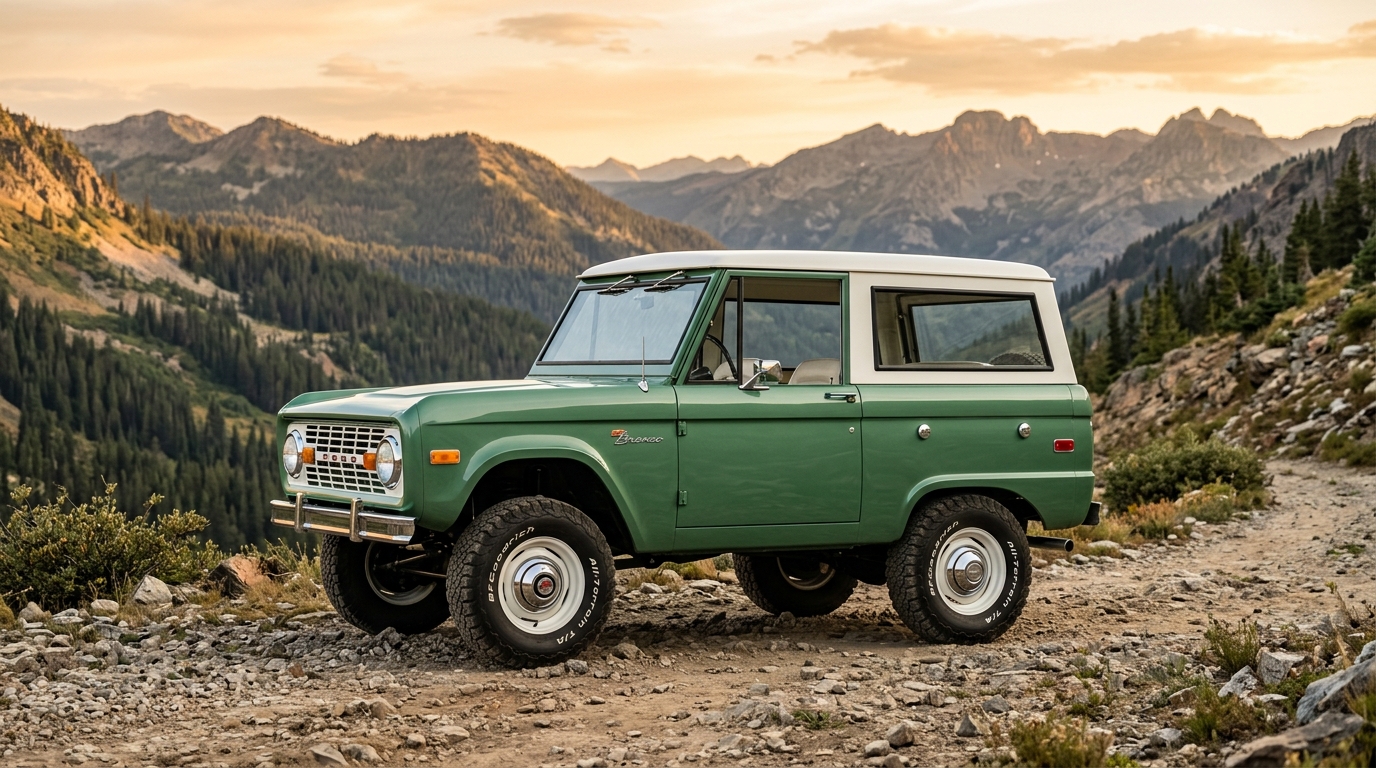
The Ford Early Bronco (1966–1977) was Ford's compact SUV, competing with the CJ-5 and International Scout. The 1966–1977 Broncos are the most collectible SUVs in America, with values up 80–120% in 5 years. The 1973–1977 models with the 302ci V8 and Sport/Bronco trim are the most desirable, at $45,000–$80,000 (#2). The 1966–1972 with the 170ci/200ci I6 is the entry point at $25,000–$40,000 (#2). The 1971–1977 with 302 V8 is the best value buy at $35,000–$55,000 (#2). Restomod Broncos (LS engine, coil suspension) can exceed $150,000. Rust in the rocker panels, floors, and rear quarter panels is the #1 issue.
The Original Compact SUV
The Early Bronco was designed by Ford truck engineer Donald Frey (who also led the Mustang project). It was smaller than the International Scout and more refined than the Jeep CJ-5. The 92-inch wheelbase made it incredibly capable off-road while remaining streetable. The Early Bronco was produced from 1966 through 1977, after which it was replaced by the full-size Bronco (1978–1996) based on the F-100 platform.
| Era | Years | Key Changes | Engines | Collectibility |
|---|---|---|---|---|
| Early | 1966–1972 | 170ci I6 base; 289ci V8 optional from 1966; simple trim | 170ci I6, 200ci I6 (1966+), 289ci V8 | Medium — first-year appeal; I6 models less valuable |
| Mid | 1973–1974 | 302ci V8 replaces 289ci; Sport trim refined; C4 auto available | 200ci I6, 302ci V8 | High — 302 V8 + Sport trim = sweet spot |
| Late | 1975–1977 | Catalytic converter; 200ci I6 dropped (1976); 302ci V8 only by 1977 | 200ci I6 (to 1975), 302ci V8 | High — most refined; 1977 last year = premium |
The 1973–1977 era is the most collectible — 302 V8, improved trim, and better reliability. The 1966 first-year has a small premium for being the debut year. The 1977 final year commands a premium as the last of the Early Broncos.
Production Numbers
| Year | Total Production | Key Notes |
|---|---|---|
| 1966 | ~22,000 | First year; 170ci I6 standard, 289ci V8 optional; Wagon and Roadster (half-cab) |
| 1967 | ~14,000 | Lowest production year; 200ci I6 replaces 170ci |
| 1968 | ~17,000 | Sport package introduced; front disc brakes optional |
| 1969 | ~19,000 | Roadster (half-cab) discontinued after 1968; Sport trim gains popularity |
| 1970 | ~18,000 | Minor updates; 302ci V8 optional (replaces 289ci mid-year) |
| 1971 | ~19,000 | 302ci V8 becomes common; C4 automatic optional |
| 1972 | ~20,000 | Last year for 289/302 transition; Sport trim standard features expand |
| 1973 | ~21,000 | 302ci V8 standard; Sport trim refined; best year for collectibility |
| 1974 | ~18,000 | Energy crisis impacts sales; 302 V8 only performance option |
| 1975 | ~17,000 | Catalytic converter added; 200ci I6 still available |
| 1976 | ~15,000 | 200ci I6 dropped; 302 V8 only engine; front disc brakes standard |
| 1977 | ~19,000 | Final Early Bronco year; replaced by full-size Bronco in 1978 |
Production data from Ford Motor Company. Total Early Bronco production: ~230,000 units over 12 years. The 1967 low was due to slow initial sales. The 1977 final-year premium is real — these are 10–15% more than equivalent 1976s.
Engine Specifications
| Engine | Displacement | Years | HP | Torque | Notes |
|---|---|---|---|---|---|
| 170ci I6 | 170ci | 1966 | 105 | 158 | Base engine first year only; slow; least valuable |
| 200ci I6 | 200ci | 1966–1975 | 120 | 170 | Replaced 170; better torque; still slow |
| 289ci V8 | 289ci | 1966–1972 | 200–205 | 282 | First V8 option; good power; most early V8 Broncos |
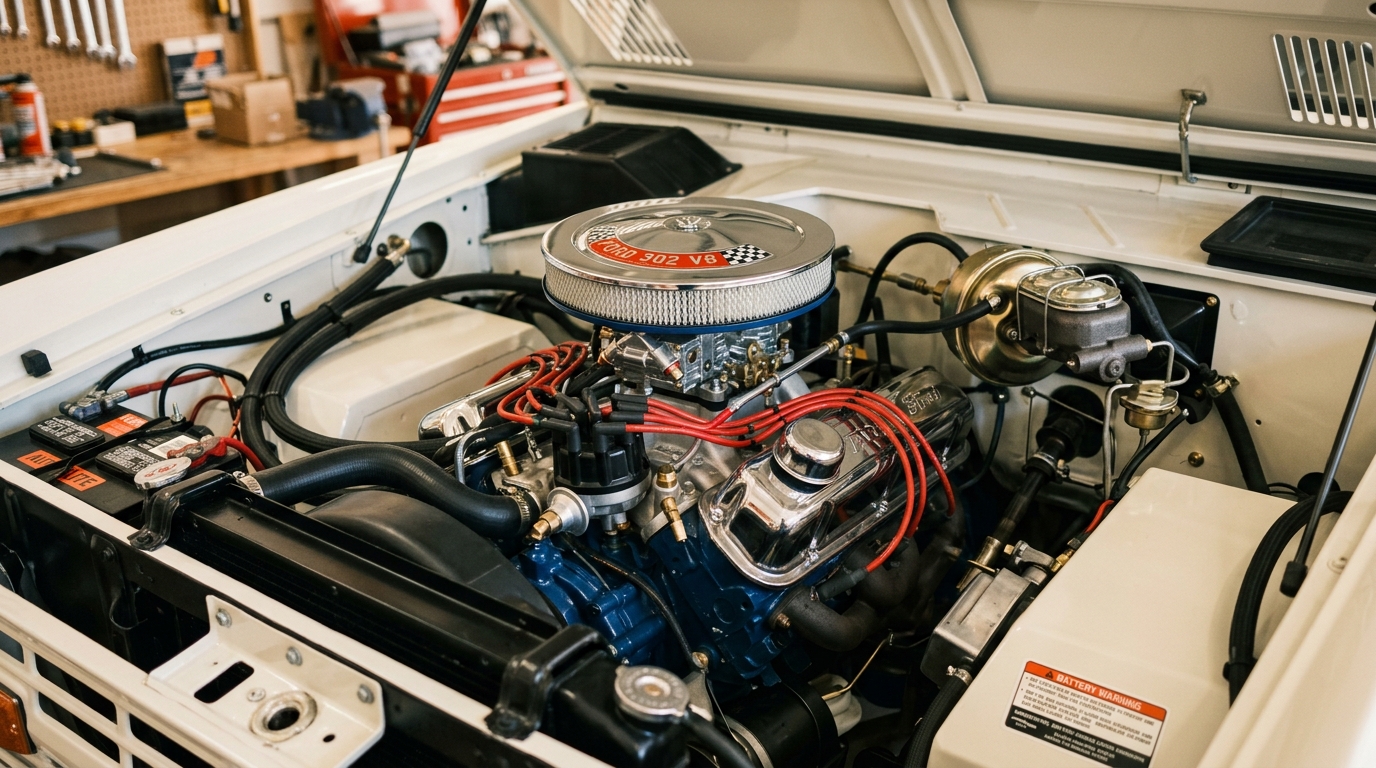
| 302ci V8 | 302ci | 1971–1977 | 137–205 | 238–300 | Replaced 289; standard from 1973; most desirable |
The 302ci V8 is the engine to have — best power, best reliability, most common in later years. The 289ci is nearly identical and acceptable in 1966–1972 models. The I6 engines are reliable but slow — only suitable for off-road or slow cruising. Note: 302ci HP dropped to 137 (net) in 1975 due to emissions — actual output is ~180hp.
Body Styles and Trim
| Body Style | Years | Description | Value Impact |
|---|---|---|---|
| Wagon | 1966–1977 | Full hardtop with rear seat and cargo area; most common | Baseline |
| Roadster (Half-Cab) | 1966–1968 | Pickup-style with short bed behind front seats; no rear seat | +10–20% (rare) |
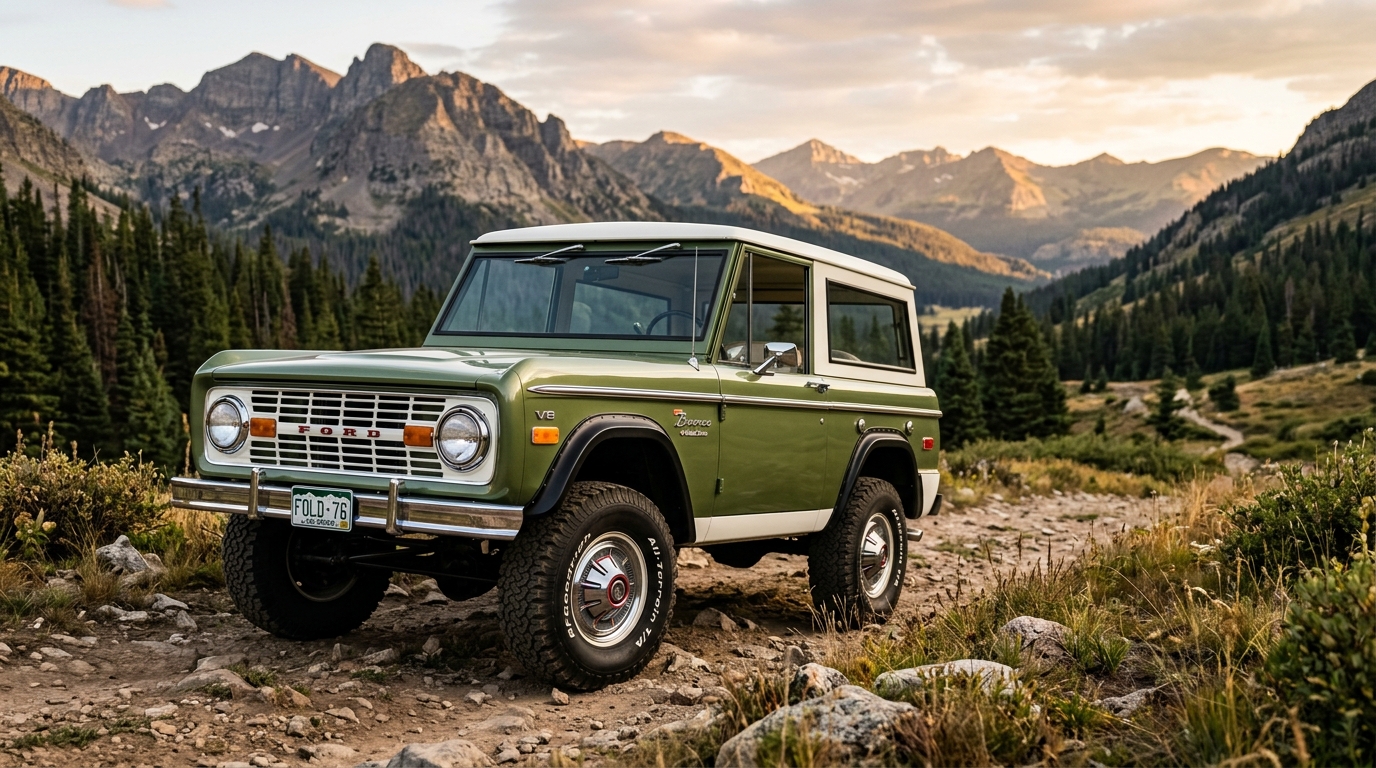
| Sport Package | 1966–1977 | Chrome grille, wheel lip moldings, Sport badges, upgraded trim | +15–25% |
| Bronco Package (1973+) | 1973–1977 | Similar to Sport; renamed; stripe decals, special trim | +15–25% |
| Base Wagon | 1966–1977 | No trim package; painted grille; minimal chrome | Baseline |
The Roadster (half-cab) is the rarest body style — only produced 1966–1968. The Sport/Bronco trim package is the most desirable — chrome grille and upgraded trim add 15–25% to value. Most collectors prefer the Wagon body style for utility and passenger capacity.
Market Values by Condition (2026)
| Variant | #1 Concours | #2 Excellent | #3 Good | #4 Fair | 5-Year Trend |
|---|---|---|---|---|---|
| 1977 Bronco 302 V8 Sport (final year) | $110,000 | $75,000 | $40,000 | $18,000 | +90% |
| 1973–1976 Bronco 302 V8 Sport | $95,000 | $65,000 | $35,000 | $15,000 | +80% |
| 1971–1972 Bronco 302 V8 Wagon | $75,000 | $50,000 | $27,000 | $12,000 | +70% |
| 1966–1970 Bronco 289 V8 Wagon | $70,000 | $48,000 | $25,000 | $10,000 | +65% |
| 1966 Bronco 289 V8 (first year) | $80,000 | $55,000 | $30,000 | $13,000 | +75% |
| 1966–1968 Bronco Roadster (half-cab) | $85,000 | $58,000 | $32,000 | $14,000 | +70% |
| 1973–1977 Bronco 302 V8 Base | $65,000 | $45,000 | $24,000 | $10,000 | +70% |
| 1966–1972 Bronco 200 I6 Wagon | $45,000 | $30,000 | $16,000 | $6,500 | +50% |
| Restomod (LS/coil suspension) | $180,000 | $120,000 | $60,000 | $25,000 | +100% |
Values from Bring a Trailer, Mecum, and Hemmings sold data (2024–2026). Early Broncos have outperformed nearly every other classic vehicle class in the past 5 years. Restomods by Icon, Velocity, or Gateway can exceed $200,000. The 1977 final year commands a 15% premium over 1976.
Value Trend Chart (2020–2026)
Early Bronco Average Values (#2 Condition)
| 2020 | 2021 | 2022 | 2023 | 2024 | 2025 | 2026 | |
|---|---|---|---|---|---|---|---|
| 1973–77 302 V8 Sport (#2) | 35000 | 45000 | 52000 | 58000 | 62000 | 65000 | 65000 |
| 1971–72 302 V8 Wagon (#2) | 28000 | 36000 | 42000 | 46000 | 48000 | 50000 | 50000 |
| 1966–72 I6 Wagon (#2) | 18000 | 22000 | 25000 | 27000 | 29000 | 30000 | 30000 |
Restomod Broncos: The $150K+ Market
Restomod Early Broncos — with LS/5.3L/6.2L V8 swaps, coil spring or link suspension conversions, modern transmissions, and luxury interiors — represent a separate market from original Broncos. Builders like Icon 4x4, Velocity Restorations, and Gateway Bronco produce $150,000–$250,000 restomods. These trucks are bought by enthusiasts who want classic looks with modern drivability. An original 302 V8 Sport is worth more to a collector; a restomod is worth more to a driver. Don't restomod an original Sport — buy a base I6 model for the conversion.
Common Rust Areas
Early Broncos rust everywhere — the body is thin steel and the design traps moisture. The most critical areas: rocker panels (structural), floor pans, rear quarter panels (behind rear wheels), front fender lower corners, tailgate, and frame (especially near spring mounts). A rust-free Bronco is worth 2–3x a rusty one. Always inspect from underneath with a flashlight and pick.
- Rocker panels
- Structural — if rusted through, body flexes
- Replacement: $1,500–$3,000
- Check by tapping with a mallet — solid should ring, not thud
- Floor pans
- Check under rubber mats; common where moisture collects
- Replacement: $500–$1,500 per side
- Rear quarter panels
- Behind rear wheels where mud and debris collect
- Lower quarters are the most common rust area
- Full quarter replacement: $2,000–$4,000
- Tailgate
- Water collects inside tailgate; rusts from inside out
- Check lower edge for bubbling
- Reproduction tailgates available: $400–$800
- Frame (spring mounts)
- Check where leaf springs mount to frame
- Critical structural; if rusted through, frame needs repair
- Common at rear spring hangers
- Front fender lower corners
- Where fender meets body; debris collects
- Check inside fender well
- Reproduction fenders available: $300–$600 each
Buying Guide
- Best investment: 1977 Bronco 302 V8 Sport
- Final year + V8 + Sport trim = the sweet spot
- $75,000 (#2); appreciating 15–20% annually
- Most refined Early Bronco; best daily driver potential
- Best value: 1973–1976 Bronco 302 V8 Sport
- Same 302 V8 and Sport trim as 1977
- $65,000 (#2) — 15% cheaper than 1977
- More available; same driving experience
- Best first-year: 1966 Bronco 289 V8 Wagon
- First year + V8 = collector appeal
- $55,000 (#2); first-year premium
- 289 V8 is nearly identical to 302; same performance
- Best rare variant: 1966–1968 Roadster (half-cab)
- Rarest body style; only 3 years production
- $58,000 (#2); rarity premium over wagon
- Less practical but more unique
- Best entry point: 1966–1972 Bronco 200 I6 Wagon
- $30,000 (#2) — cheapest way into Early Bronco ownership
- I6 is slow but reliable; good for off-road use
- Can swap to 302 V8 later ($5,000–$8,000 engine swap)
- Best restomod base: 1966–1972 I6 Wagon (rust-free)
- Buy a solid I6 body for $20,000–$30,000
- LS swap + coil suspension + paint: $40,000–$80,000
- Total investment: $60,000–$110,000 for a $120,000+ restomod
- Avoid: Any Bronco with frame rust at spring mounts
- Structural rust = dangerous and expensive to repair
- Frame repair can cost $5,000–$15,000
- Only buy if price is under $10,000 as a major project
Frequently Asked Questions
- Why are Early Broncos so expensive?
- Three factors: (1) limited supply (~230,000 built over 12 years, many rusted away), (2) huge demand from the SUV/overlanding trend, and (3) restomod builders are buying up clean examples as donor bodies. The result: a clean original Bronco is worth more than many classic muscle cars.
- Should I buy an original or restomod Bronco?
- If you want investment value: buy original, especially a 302 V8 Sport. If you want to drive it daily: buy or build a restomod. Don't restomod an original Sport — that destroys collector value. Instead, buy a base I6 model for the restomod conversion and keep the Sport original.
- Are Early Broncos good off-road?
- Excellent — the 92-inch wheelbase and solid axles front/rear make them extremely capable. The Dana 20 transfer case with 2.46:1 low range is robust. The main limitations are drum brakes (pre-1976) and the 302 V8's modest power. Most restomods add power steering and disc brakes for better trail performance.
- What is the difference between Early Bronco and full-size Bronco?
- The Early Bronco (1966–1977) is a compact SUV on a dedicated 92" wheelbase chassis. The full-size Bronco (1978–1996) is based on the F-100/F-150 platform with a 104" wheelbase. The Early Bronco is far more collectible and valuable — full-size Broncos are worth 30–50% less in equivalent condition.
- Can I daily drive an Early Bronco?
- A 302 V8 with automatic transmission and disc brakes (1976+) can be a weekend driver. But drum brakes, no airbags, poor fuel economy (10–12 mpg), and 70 mph top speed make daily driving challenging. Most owners use them as weekend/seasonal vehicles. Restomods with LS engines and modern suspension are much more daily-drivable.
Get an AI-powered valuation for your Early Bronco — free, instant, based on real auction data.
Value My BroncoSources & References
- Hagerty Price Guide — Valuation Tools — Independent valuation data by condition grade #1-#4
- Bring a Trailer — Auction Results — Real-world auction sale prices for market comparison
- Related: Ford F100 Bumpside Dentside Hub — In-depth related guide from our editorial library
- Related: Squarebody C10 Generation Hub — In-depth related guide from our editorial library
- Related: Restoration Cost Calculator — In-depth related guide from our editorial library